 The Market Monitor Minding the Nation's Business
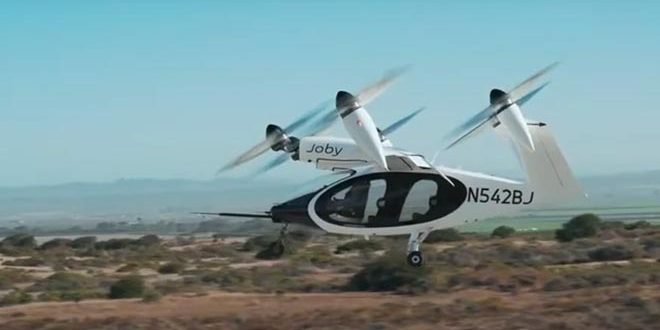
DUBAI – Flying Taxis – the stuff of several sci-fi stories – are an inch closer to reality, first in the United States, then in the United Arab Emirates and India.
“What we used to think of as science fiction is now science fact,” Billy Nolen, Archer Aviation’s chief safety officer, told AFP at the Dubai Airshow.
“This is happening. It is real. You will see this in the market in 2025.”
Reports of futuristic aircraft ferrying passengers over cities — and their car-choked roads — have been cropping up for years.
Approval from the US Federal Aviation Administration for Archer’s Midnight, a four-passenger, electric-powered vertical take-off and landing (eVTOL) aircraft, is expected as early as next year.
That will trigger “almost concurrent” certification in the UAE, said Nikhil Goel, chief commercial officer at Archer, whose major backers include Mubadala, an Emirati sovereign wealth fund.
UAE flights are expected to start in 2026 on two initial routes: from Dubai airport to the upmarket Palm development, and Abu Dhabi airport to the city-centre Corniche.
“We expect the demand to be more than we can even handle. The pricing will be relatively premium at the outset,” said Goel.
“Over time, we’ll deploy hundreds of aircraft in the UAE (which) will also lower the price considerably.”
At the same time, flights will launch in New Delhi, Mumbai and Bangalore, Goel said, calling India “a really, really big market for us”.
Test flights for Archer’s Midnight are taking place in California, and rival firm Joby has performed its first experimental journeys in New York.
The Midnight has a dozen propellers — independently wired and powered, to minimize the risk of a “catastrophic” failure — and a wing, allowing it to glide in the event it can no longer stay aloft.
It will be able to fully recharge in the six or seven minutes that it takes to switch passengers between trips, and has a current maximum range of about 160 kilometers (100 miles) at about 240 kilometers per hour (150 mph).
Flying the aircraft is straightforward, said Goel, who insisted that a 12-year-old in a simulator could learn it in 20 minutes.
Flights will be booked as ride shares. It will initially cost about $4-5 per passenger mile before dropping to half in about two or three years, Goel added.
With flying taxis using existing helicopter routes — and theoretically safer, cheaper and more environmentally friendly than helicopters — there is significant room to scale up, the company says.
“We have designed this business case to operate in urban environments, say from the airport to city center,” said Golen, the chief safety officer.
It’s fully zero-emissions, fully sustainable. It is eco-friendly. It has about 100 times less noise signature than a conventional helicopter. AFP