 The Market Monitor Minding the Nation's Business

By Tracy Cabrera
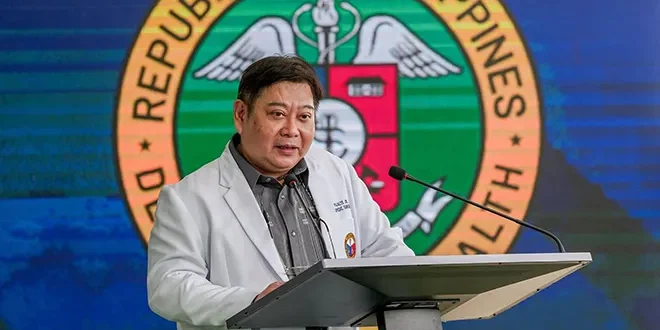
The appointment of Dr. Jose Brittanio Pujalte Jr. as Secretary of the Department of Health (DoH) has raised hopes that long-awaited reforms will finally improve access to quality healthcare for millions of Filipinos.
A respected orthopedic surgeon and former executive director of the Philippine Orthopedic Center, Pujalte assumes office as the country’s health sector continues to grapple with underfunding, a shortage of healthcare workers and unequal access to medical services.
His appointment follows the resignation of former Health Secretary Teodoro Herbosa, who stepped down citing health reasons amid graft and administrative complaints before the Office of the Ombudsman, allegations he has denied.
Pujalte has made it clear that his priority is transforming the healthcare system by shifting its focus from hospital-centered treatment to preventive, community-based care.
Central to his agenda is a “Primary Care First” policy that seeks to strengthen Barangay Health Stations (BHS) and Rural Health Units (RHU). He wants these facilities to be fully staffed with doctors, nurses and midwives, equipped with essential medicines and diagnostic services, and open beyond regular office hours.
He also plans to expand the Yaman ng Kalusugan Program (YAKAP) to provide free consultations, laboratory tests and essential medicines, allowing patients to receive treatment closer to home while easing congestion in tertiary hospitals.
Another priority is accelerating the digital transformation of healthcare. The COVID-19 pandemic exposed weaknesses in the country’s fragmented health information system, prompting the DoH to pursue a unified National Health Information System that would enable patients’ medical records to be securely accessed across healthcare facilities nationwide.
Beyond medical services, Pujalte is promoting a “Health in All Policies” approach that recognizes the impact of nutrition, housing, education and the environment on public health. His proposals include stronger measures against food insecurity, improved nutrition labeling and healthier food choices.
“Health is not merely the absence of disease—it is a state of complete physical, mental and social well-being,” Pujalte has emphasized, underscoring his commitment to preventive and community-centered healthcare.
The challenges remain significant. Thousands of Filipino healthcare professionals continue to leave for better-paying jobs abroad, while many communities still lack adequate medical facilities and mental health services.
Still, Pujalte’s appointment offers an opportunity to reshape Philippine healthcare into a more accessible, preventive, and equitable system.
The success of his reform agenda will depend on sustained government support, adequate funding, and close coordination with local governments and healthcare providers.