 The Market Monitor Minding the Nation's Business
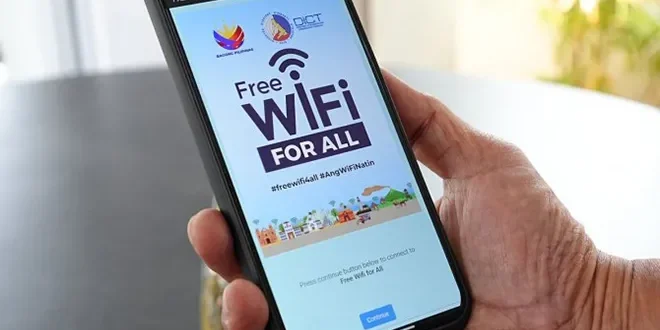
The government is putting a massive ₱53.1 billion behind its digital transformation drive next year, aiming to expand public internet access, modernize government systems, and equip Filipino workers for an increasingly technology-driven economy.
The proposed allocation for information and communications technology (ICT) and digitalization expenditures under the 2027 National Expenditure Program (NEP) represents a major push to make digital connectivity and online government services more accessible across the country.
A key target is the expansion of free public internet access points nationwide to 38,829 in 2027, up by 15,913 or nearly 69 percent from the 22,916 target for 2026.
The Department of Budget and Management (DBM) said the expansion will be funded through the ₱5-billion Free Public Internet Access Program, retaining the same funding level provided under the 2026 General Appropriations Act (GAA) but supporting a much larger number of active access points.
Covered public locations are expected to rise to 14,969 from 13,671, while the number of localities with connectivity is projected to reach 1,634.
The program will focus particularly on geographically isolated and disadvantaged areas, including remote barangays, public schools, healthcare facilities, and transportation hubs.
President Ferdinand Marcos Jr. said the connectivity drive is intended to narrow the digital divide and give Filipinos outside major urban centers better access to essential services and opportunities.
“By expanding reliable connectivity, we bring essential government services, education, healthcare, and economic opportunities closer, regardless of location,” Marcos said in his 2027 budget message to Congress.
The proposed spending also signals a sharp acceleration in the government’s move toward digital public services.
Funding for the eGovernment Program is set to more than double to ₱3.23 billion in 2027 from ₱1.49 billion under the 2026 GAA.
The National Government Data Center Infrastructure is likewise proposed to receive ₱950 million, 27 percent higher than its ₱748-million allocation this year.
The increased funding is designed to improve the interoperability of government information systems and strengthen digital platforms such as eGovPH, allowing agencies to share information and deliver services more efficiently.
The National Government Portal, envisioned as a one-stop digital platform for government transactions, is proposed to receive ₱312 million, compared with ₱292 million in 2026.
The National Broadband Program is also in line for a substantial increase, with proposed funding rising 69.3 percent to ₱1.1 billion from ₱667 million this year. The Philippine Digital Infrastructure Project would receive another ₱2.16 billion.
For businesses and consumers, the broader digitalization effort could mean fewer physical transactions, faster access to government services and a more connected environment for commerce and investment.
DBM Acting Secretary Kim Robert de Leon said reliable digital infrastructure is becoming fundamental to improving both public service delivery and economic participation.
“An efficient government begins with reliable digital infrastructure and data-driven decision-making. To advance our digital transformation agenda, we are providing PHP5 billion for the Free Public Internet Access Program, expanding connectivity to nearly 40,000 access points nationwide enabling more Filipinos to access government services, education, and economic opportunities,” De Leon said.
The proposed ₱53.1-billion ICT and digitalization package also puts emphasis on people who will power the country’s digital economy.
The Department of Information and Communications Technology (DICT) accounts for ₱14.4 billion in ICT-related expenditures, the largest share among national government agencies and equivalent to 27.2 percent of the government-wide total.
About ₱722 million is proposed for the DICT’s ICT Capacity and Industry Ecosystem Development and Management Program, covering initiatives aimed at strengthening the country’s capabilities in emerging technologies, including artificial intelligence and machine learning.
Of this amount, ₱143 million is earmarked for the ICT Workforce Upskilling and Reskilling Program, while ₱193 million is proposed for Digital Transformation Centers.
The programs are expected to strengthen Filipino capabilities in areas such as virtual assistance, data analytics, cybersecurity, and digital marketing.
Beyond government efficiency, the investment carries a wider economic objective: preparing Filipino workers and businesses to compete in a global economy where digital skills are increasingly becoming a basic requirement.
For the Philippines, the 2027 digital spending plan therefore goes beyond providing faster internet. It represents a broader attempt to build the infrastructure, government systems, and workforce needed to make digitalization a bigger driver of economic activity.