 The Market Monitor Minding the Nation's Business
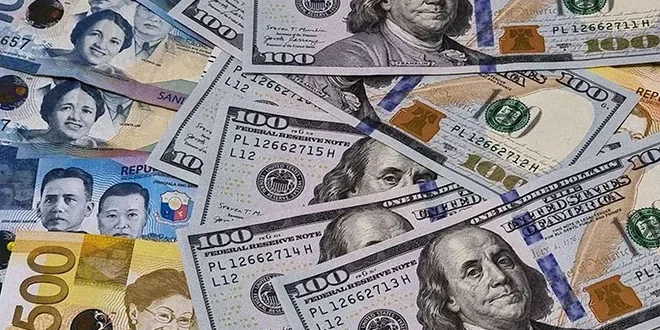
Continued reforms to improve the business climate, attract foreign investments and expand exports could help cushion the Philippine peso from further weakness against the US dollar, an economist said.
Rizal Commercial Banking Corp. (RCBC) chief economist Michael Ricafort said the peso’s future direction remains difficult to predict, with movements largely influenced by market conditions and the Bangko Sentral ng Pilipinas’ (BSP) efforts to manage volatility.
“(Its movements are) largely a function of BSP (Bangko Sentral ng Pilipinas) intervention/smoothening of market volatility,” Ricafort said in an interview last week.
The peso closed at ₱62.53 against the US dollar on Thursday, nearly unchanged from the previous trading session.
While the BSP has repeatedly emphasized that its participation in the foreign exchange market is aimed at tempering excessive volatility rather than setting a specific peso-dollar rate, Ricafort said longer-term improvements in the economy remain crucial to strengthening the local currency.
One key area is exports.
Ricafort called for more aggressive trade strategies to increase the country’s foreign exchange earnings by expanding both the range of Philippine products and the markets where they are sold.
“(We need to) boost more exports through more export products and destinations, as most of our neighbors in ASEAN (Association of Southeast Asian Nations) and Asia are net goods exporting countries,” he said.
The push comes as Philippine exports continue to post strong growth. Data from the Philippine Statistics Authority showed that exports expanded by 15.3 percent in 2025 to a record USD84.48 billion.
The momentum continued through July 2026, with merchandise exports rising 12.9 percent to USD54.92 billion, according to the PSA.
The export performance has already exceeded the government’s 3 percent growth target for goods exports and 4 percent target for services exports for the year.
The Department of Trade and Industry is working to open additional markets for Filipino products, a strategy that could help generate more dollar earnings and provide greater support for the peso.
Ricafort also urged Filipino consumers to favor locally produced goods over imported products whenever possible. Greater demand for domestic products could help reduce the country’s need for foreign currency to pay for imports while supporting local manufacturers and businesses.
Another concern is the Philippines’ exposure to foreign-currency debt, which can become more expensive in peso terms when the local currency weakens.
Ricafort said the country should reduce its dependence on debt denominated in US dollars and other foreign currencies “in view of risk of forex losses involved, learning from mistakes in past crisis periods.”
He also pointed to the need to reduce the country’s structural dependence on imported fuel, which requires significant dollar payments.
“(There is also a need to) further accelerate renewable power sources such as solar, wind, geothermal, hydro, WTE (waste-to-energy), (and) nuclear, (as well as the use of) EVs (electric vehicles) to structurally reduce reliance on imported oil/fuels/petroleum,” he added.
For the Philippines, the longer-term peso outlook may therefore depend not only on central bank intervention but on the country’s ability to generate more export revenues, attract productive investments, strengthen domestic industries and reduce its dependence on dollar-denominated imports and debt.
A stronger and more diversified economic base could provide the peso with greater support as the country navigates continuing pressures from global currency and trade markets.