 The Market Monitor Minding the Nation's Business
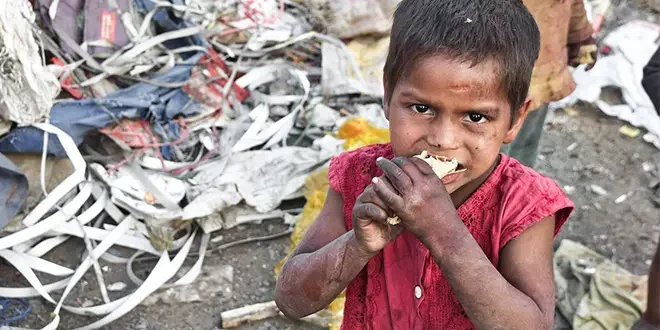
Around 733 million people all ovrr the world continue to face hunger.
This was the dire warning of Director General Qu Dongyu of the Food and Agriculture Organization at the G20 Agriculture Working Group Ministerial Meeting in Chapada dos Guimaraes, Brazil as he stressed global targets remain “worryingly out of reach.”
While notable progress has been made in the Latin American and Caribbean region, Qu noted that hunger is still on the rise in Africa and remains relatively unchanged in Asia, said FAOs’ report published in Business Mirror.
“Climate change, economic shocks, and conflict are significant drivers of global hunger, and are causing food crises of a scale not seen in many years.”
In Sudan, for instance, over 25 million people were estimated to face high levels of acute food insecurity between June and September.
In Gaza, the entire population of 2.2 million people continues to need urgent food and livelihood assistance.
Meanwhile, in Afghanistan, the Democratic Republic of Congo, Myanmar, South Sudan, Pakistan, Haiti, and Nigeria, over 1 million people in each country face a food emergency.
“We cannot fail them,” he said. “We need to step up food assistance while developing and implementing strategies that protect the environment and generate fair incomes for farmers.”
Family farmers, in particular, play a central role in ensuring global food security, as they account for more than 90 percent of the world’s farms, occupy 70-80 percent of farmland, and produce more than 80 percent of the world’s food in value terms.
“To transform our agrifood systems to become more efficient, more inclusive, more resilient, and more sustainable requires a stronger political commitment, social agenda, and overall inputs, which should strengthen the role of family farmers, small producers, gIndigenous Peoples, and traditional communities.”
In his address, Qu said one of the key values of the G20 is to serve as venue for policy coordination among the largest economies oin the world. A great example of this is the Agricultural Market Information System (AMIS), hosted at FAO, and now a consolidated pillar of the global agricultural market.
Qu also noted the progress made in reducing hunger in Latin America, especially in the hosting nation of Brazil, and the G20’s unanimous support for its proposal to launch a Global Alliance Against Hunger and Poverty.
“The world needs more cooperation within the G20. For this reason, I would like to commend the Government of Brazil for bringing food security back to the center of the G20 discussions and for promoting and ensuring support beyond the G20 to end hunger through the Global Alliance against Hunger and Poverty.”
He added that FAO is supporting the Global Alliance by hosting its Support Mechanism in Rome, curating its Policy Basket, and contributing to its three pillars.