 The Market Monitor Minding the Nation's Business
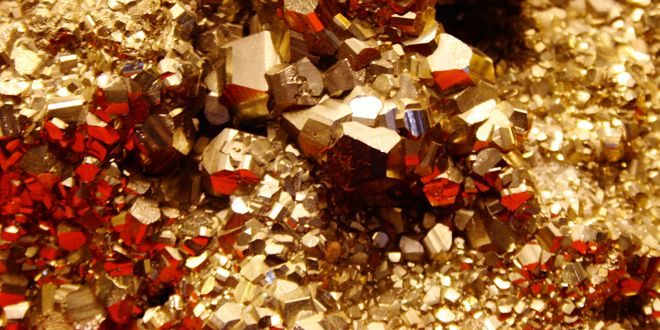
 The pale brass yellow sheen of iron pyrite has earned it the colloquial monicker “fool’s gold” and for the overly reckless miner wildly screaming “Thar’s gold in them hills!”, its discovery could very well have led to premature claims more deservingly a tall tale than the genuine thing. The extended metaphor both on iron pyrite’s fake but bright sheen and the claims these might have ignited as well as the vast difference in value between the deceptive mineral and real gold makes for an appropriate analogy when we analyze what a multimillion peso media campaign has been spinning all along.
The media campaign has quite skillfully shoved the debate from one intelligently focused on the very real and fatal costs of environmental destruction and the violent loss of innocent lives of a good number of our most helpless and vulnerable to imagery and misconceptions such as the blinding glitter of gold represented by gross domestic productivity and employment generation.
Ok then. Let us take the debate into those arenas. But this time let’s do the math.
The mining industry and its advocates, those in both the Senate and the House of Representatives deeply invested in mining and through their political skill, clawed their way into the most influential seats invariably cite mining’s importance as an employer.
Really? Are they serious? As of last count they employed just about 236, 400 jobs. That’s a scant sliver over a half a percent compared to the total employment picture of the whole economy – hardly even a pixel worth boasting about in the total jobs and livelihood landscape.
For that to even make sense in absolute amounts, we need to net out those disenfranchised farmers and fisher folk deprived of a livelihood and, in exchange, if they are lucky, forced to dynamite-dig huge cavities out of what was their ancestral farmland, or dump poison and toxic waste unto the waters that once teemed with marine life that sustained their families.
Again, do the math. Count also those thousands forced out of their farms from the faraway flatlands and the downstream valleys lying below the carved and hollowed out mountains and hills where the uphill watersheds are ravaged by miners thus directly causing floods below that inundate life sustaining crops on one hand or, at other times, deprive them of irrigation water thus drying out fertile soil.
Denuded forests and open pit mines, hollowed out mountains and barren ground poisoned by the chemicals and acid miners use to process their metals can no longer absorb rainwater or maintain pure aquifers. Either water runs off and floods, dries up irrigation sources, or they poison the watersheds and food-baskets that feed us. Indeed, how much of unemployment is caused by such deliberate destruction?
Mining alleviates unemployment? Does it? Count those flatland farmers and freshwater fisher folk among the many who’ve lost their livelihood so that someone might have a shiny chrome hood ornament.
And since we are now counting heads, let us attempt if we can and if it is at all possible to count the immeasurable, the increasing number of men, women and children, whole families and whole communities are first militarized and then are murdered and massacred so that the ancestral land on which they lived on, handed down from generations and preserved green, idyllic and pristine, needed to be excavated out so that some fat-assed consumer somewhere in a foreign economy might have nickel-plated faucets and flushing levers over his toilet.
According to one count by Global Witness, an international watchdog with offices in London and Washington D.C., these types of murderous deaths in the Philippines attributable to aggressive mining in the lawless hinterlands account for a third of all such deaths globally thus making us, once again, the ignominious killing capital of sorts.
What were these families guilty of that they and their young children should either be hacked to death, gruesomely dismembered, or suffer a bullet to the skull when all they really did was to decry that their homes were being turned into a cavernous black pit?
Mining advocates and their handsomely compensated external affairs executives, public relations officers and the politicians patently on their side also like to quote mining’s economic criticality to domestic productivity.
Productivity? Really? Are they serious?
Let’s do the math. As of January GDP from mining was P15,133.33 million. Agriculture which mining ravages in those areas were farmlands, fish sanctuaries and watersheds once teemed with life sustaining produce, marine life and pure and clean aquifers contributed as much as P174, 563.28 million within the same comparable period, both from a total GDP of $292.45 billion. A cursory analysis immediately shows that between one endeavor that desolates both productive farmlands and watersheds as well as kills marine life where its effluents poison and defile, as against another that feeds, nourishes and protects the very nature that sustains us, clearly mining’s contribution to economic productivity is comparatively nil.
From the perspective of mining’s strongest arguments for their continued existence—employment and productivity—mining is mathematically and essentially fool’s gold, its claims as fake as its contribution to the economy and as false as the choices it imposes against life-sustaining agriculture— that very endeavor it kills.