 The Market Monitor Minding the Nation's Business
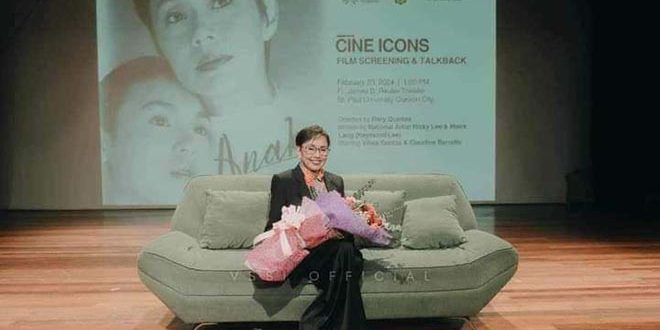
Thanks to the Cultural Center of the Philippines (CCP) Film, Broadcast and New Media Division in continuing to bring back screen masterpieces of National Artists to perpetually educate and inspire the multigenerational audiences not only in film appreciation but evaluation if not criticism as well.
“Cine Icons” help prepare the moviegoers to understand better the messages of the films across time and various artists.
Two retrospective showings in a row of great Filipino movies made us realize the importance of motion pictures in the contemporary times when line streaming apps are the most favored platforms.
Star Cinema’s “Anak” (2000) written by National Artist for Film and Broadcast Arts Ricky Lee, starred in by Vilma Santos, Claudine Barretto, among others and directed by Rory Quintos and Viva Films’ “The Flor Contemplacion Story” (1995) written by Ricky and progressive artist Bonifacio Ilagan, starred in by National Artist for Film and Broadcast Arts Nora Aunor and directed by Joel Lamangan where shown in two separate venues were gems that radiated their brightness and illuminated truths about Philippine society on respective moviegoers.
“Anak” was screened three weeks apart from “The Flor Contemplacion Story” at St. Paul University in Quezon City and GSIS Theater in Pasay City, respectively and they resonated well to the multisectoral watchers.
Both films were about Overseas Filipino Workers (OFWs) and both elicited empathy and understanding of their plight.
Needless to say, both induced tears of joy as well as protests not only from the actors themselves but from the spectators as well.
Joy for the reconciliation of family members in “Anak” after a series of lachrymal scenes that echoed the emotional experiences of the characters and the audience and sadness over the death of a Filipino caregiver in a foreign land not of her doing and collective outcry of dissent against institutions that oppress the working classes in “The Flor Contemplacion Story.”
“As long as we allow ourselves to be oppressed and to do nothing about oppression, we will continue to write these types of films,” passionately said Ricky.
In “Anak,” tears flowed because of complacency and neglect of authorities in high places while in “The Flor…,” tears flooded not only because of oppression but of anger and defiance of indifference of the establishment as well.
“Anak” and “Flor” are timeless masterpieces that bravely tell the truth.
What are truths for?
As Beverly Wico Sy, one of the panelists of “Flor” Q&A challenged the audience: “Now that you’ve seen the truths, what do we do about them? BOY VILLASANTA