 The Market Monitor Minding the Nation's Business
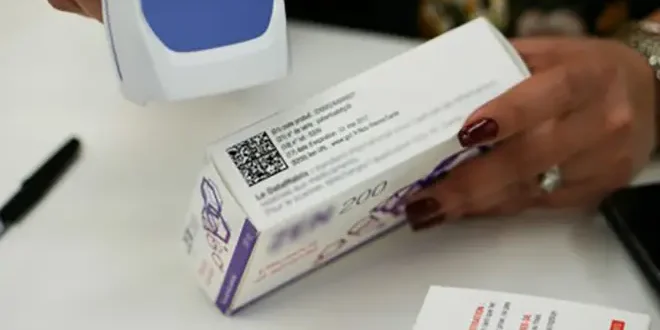
Local pharmaceutical industry players are being encouraged to adopt 2D barcodes, including Quick Response (QR) codes, to combat the spread of counterfeit medicines and medical supplies in the domestic market.
GS1 Philippines, the leading organization for local barcode standards, emphasized the importance of this measure as the country remains under the watch of the United States Trade Representative (USTR) for fraudulent medical products.
In a statement released recently, GS1 Philippines said it is implementing the Global Trade Item Numbers (GTINs) system in the country. This system allows for the capture of crucial data such as the manufacturing date, expiration date, and the manufacturer’s name, which enhances product identification and verification.
These detailed pieces of information can be stored using 2D barcodes, which feature both vertical and horizontal patterns, similar to QR codes. Unlike the current 1D barcodes that only identify product codes, 2D barcodes provide more comprehensive data that consumers can access and verify by scanning the QR code.
“The threat of counterfeit medicines endangers consumer safety and erodes trust in healthcare providers. By utilizing barcode technology, we can integrate global standards that prioritize patient safety, especially in regions heavily affected by counterfeit products,” said GS1 Philippines President Roberto Claudio.
Teodoro Padilla, officer and trustee of the Pharmaceutical and Healthcare Association of the Philippines (PHAP) and GS1 Philippines, affirmed the local pharmaceutical industry’s support for adopting 2D barcode technology.
“PHAP fully supports this innovation, recognizing its potential to verify products and prevent counterfeit medicines from reaching patients. To strengthen our fight against fake drugs, PHAP calls for collaboration among pharmaceutical companies, regulatory agencies, healthcare providers, and the public to accelerate the adoption of this technology, strictly enforce regulations, and raise awareness to safeguard Filipino patients,” Padilla said.
According to GS1 Philippines, 31 companies within the healthcare supply chain have already transitioned to using 2D barcodes. Globally, efforts are underway to ensure that by the end of 2027, 2D barcodes will be widely adopted, and point-of-sale (POS) systems will be capable of scanning these codes.