 The Market Monitor Minding the Nation's Business
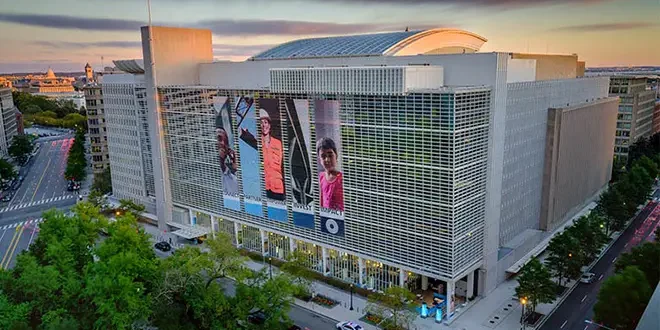
The World Bank last week revised its 2024 and 2025 economic growth forecasts for the Philippines, highlighting the country’s favorable medium-term outlook.
In its October East Asia and Pacific Economic Update, the World Bank projected the Philippine economy to grow by 6.0 percent this year, up from its earlier forecast of 5.8 percent. The 2025 growth forecast was also raised to 6.1 percent, from 5.9 percent.
The World Bank’s latest forecast for the Philippines surpasses growth projections for China, Indonesia, Malaysia, Thailand, and Cambodia.
In a separate Macro Poverty Outlook report, the World Bank noted that domestic demand and public investment will support the Philippines’ economic growth.
“The medium-term outlook remains favorable, averaging 6.0 percent in 2024-26. Strong growth will be driven by robust domestic demand, aided by more accommodative monetary policy and sustained public investment,” the World Bank stated.
It added that private consumption will remain the primary driver of growth, supported by steady remittance inflows, a strong labor market, and lower inflation.
Improved investment activity, with public investment expected to remain above 5.0 percent of the country’s gross domestic product (GDP), will also support growth. Lower real interest rates will benefit both private investment and household consumption, while continued improvements in the labor market and easing inflation are likely to bolster household income growth.
“Poverty is expected to continue declining, though extreme weather events pose risks,” the report noted. The World Bank projects poverty incidence to drop from 17.8 percent in 2021 to 13.6 percent in 2024, and further to 11.3 percent by 2026, based on its lower-middle-income country poverty line of USD 3.65 per day (2017 PPP).
However, the World Bank cautioned that risks to the growth outlook remain skewed to the downside. Externally, a global economic slowdown or weaker-than-expected growth in China could hamper Philippine growth due to strong trade ties. Domestically, food security could be affected by persistent weakness in agriculture, particularly in the event of a severe La Niña. Other risks include potential commodity price shocks from geopolitical conflicts, trade restrictions, and climate-related disasters.
On the topic of Artificial Intelligence (AI), the World Bank said that technological advancements, particularly in automation and digitalization, present both opportunities and challenges for the Philippines.
In the Business Process Outsourcing (BPO) sector, a key growth and employment driver, AI could either enhance worker productivity or displace jobs that involve routine tasks. The overall impact of AI will depend on how well businesses, workers, and policymakers adapt, making a proactive response crucial.