 The Market Monitor Minding the Nation's Business
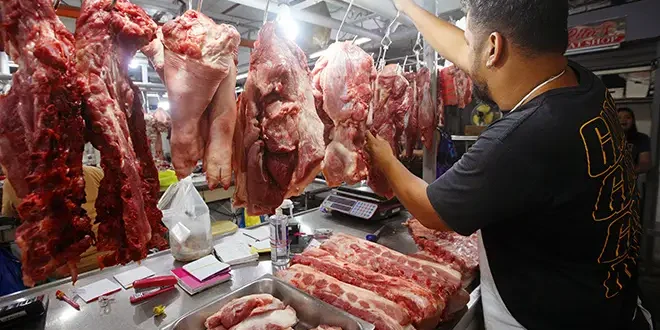
After setting a P58 per kg suggested retail price (SRP) for rice last January 20, the Department of Agriculture is setting a P380 per kg SRP for liempo (belly) and P350 per kg for kasim (shoulder) and pigue (hind legs) beginning March 10.
The SRP would be adopted in markets of the National Capital Region to ease the financial strain on consumers from super high prices.
The DA said this new pricing initiative considers the ongoing challenges facing the pork industry, particularly the lingering effects of African Swine Fever (ASF), said a post on its website.
DA Secretary Francisco P. Tiu Laurel Jr. said the decision was reached after consultations with industry stakeholders—producers, wholesalers, traders, and retailers– to ensure the sustainability of the pork industry, which reels from the adverse effects of ASF.
The DA will also be imposing an MSP of P300 per kilo for “sabit ulo” or the price at which traders pass pork to retailers.
Just like rice, the SRP would be reviewed after one month to determine if adjustments should be made.
Pork sold in supermarkets and hypermarkets will be exempt from the MSRP given their higher operating costs.
DA Undersecretary for Livestock Dante Palabrica cited that industry groups have shown willingness to support the government’s efforts to make pork more affordable.
“They’ve recognized that if prices stay above P400 per kilo, consumers may shift to imported pork or other protein sources like chicken and fish,” he explained.
Even Rosendo So, chair of SINAG (or the Samahang Industriya ng Agrikultura) expressed support for the DA’s efforts saying “:we are doing our part to help alleviate the burdens of Filipino consumers.”
ProProk president Rolando Tambago affirmed the industry’s backing of the initiative, emphasizing that it is essential for the long-term stability of the pork industry.
Chester Warren Yeo Tan, chair of the National Federation of Hog Farmers Inc., agreed that the MSRP will help stabilize pork prices, benefiting both consumers and the entire pork value chain, which continues to be challenged by ASF.
As of Feb. 14, 19 provinces in nine regions had active ASF cases, according to the Bureau of Animal Industry. First detected in 2019, ASF has spread to 76 provinces, it said.