 The Market Monitor Minding the Nation's Business
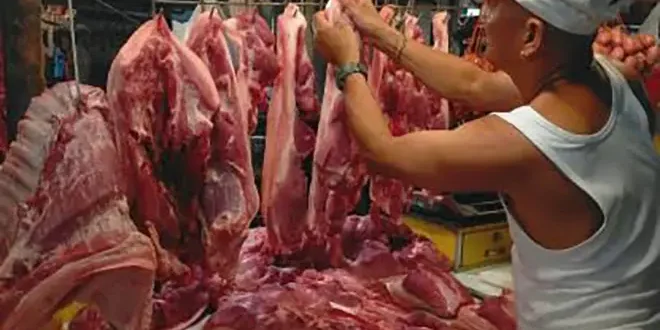
The country’s meat imports surged by 25.9 percent (year-on-year) in the first quarter of 2025 due to higher demand for pork and chicken imports, the Bureau of Animal Industry (BAI) reported.
The BAI data released Tuesday showed that total meat imports in the January to March this year rose to 344.59 million kilograms from 273.64 million kg for the same period in 2024.
Pork accounted for the bulk at 70.45 million kg, or 53.2 percent of all meat that entered the country during Q1. This volume represented a 42.5% rise from 128.5 million kg recorded a year earlier.
Chicken followed, with 111.36 million kg, or 32.3 percent increasing by 14.8 percent from 97.03 million kg a year earlier.
Beef imports also rose during Q1 at 43.9 million kg, or 12.7% or 24.2 percent more than the 35.32 million kg of beef imported for Q1 in 2024.
Buffalo and turkey meat imports dropped to 5.9 million kg of buffalo in Q1 2025 or by 51.8 percent from 12.32 million kg imported during Q1 of 2024, while turkey imports also plummeted by 82.4 percent to 54,088 kg from 307,835 kg.
Meanwhile, lamb imports in the first quarter of 2025 reached 154,419 kg, a 26.1 percent jump from the 122,483 kg imported a year earlier.
Duck meat imports fell to 18,544 kg, down by 44.4 percent from 33,375 kg.
Earlier, Jess Cham, president emeritus of the Meat Importers and Traders Association (MITA), said the country would continue to rely mainly on meat imports, especially for pork, unless local producers find ways to recover their production levels amid the threat of the African swine fever.
Data from the Department of Agriculture’s Bantay Presyo in select markets in Metro Manila, as of Tuesday showed prevailing prices of pork ham ranging from P365 to P400/kg; pork belly from P390 to P470/kg; frozen kasim, from P225 to P300/kg; frozen liempo, from P290 to P350; whole dressed chicken from P175 to P240 per kg; beef rump from P420 to P510 per kg and beef brisket from P320 to P460 per kg.