 The Market Monitor Minding the Nation's Business
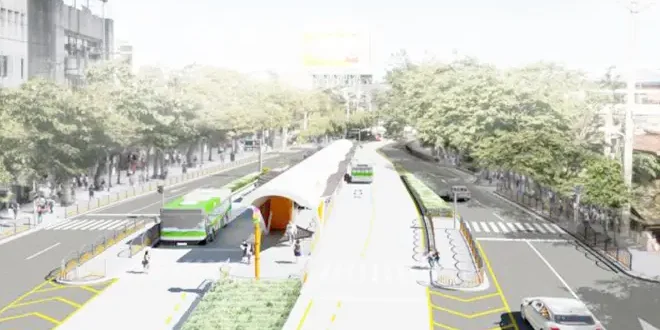
With limited time remaining before its loan financing for the long-delayed Cebu bus rapid transit (BRT) expires, the World Bank has recommended downscaling the project under the watch of the newly elected provincial and city officials.
“The pace of project implementation has slowed down considerably; notably, the major civil works packages are yet to be launched,” the World Bank lamented in a July 1 implementation status and results report on its investment project financing (IPF) for Cebu BRT.
“The project will not be able to complete a substantial amount of balance activities within the current closing date,” the Washington-based multilateral lender added. The World Bank loan for the Cebu BRT project will close on Sept. 30, 2026.
Out of the $116-million International Bank for Reconstruction and Development (IBRD) loan for the project aimed at helping Cebu City reduce pollution and traffic, create jobs, as well as make the metropolis a more attractive investment destination, only $37.4 million, or 32.24%, have been disbursed so far.
The $25-million financing from the World Bank’s Clean Technology Fund (CTF) remains untouched.
For the World Bank, “considering the age of the project, it may be more appropriate to restructure the project to address the activities that can be completed within the closing date.”
“As the new leadership of the Cebu provincial and city governments will take office on July 1, 2025, DOTr [Department of Transportation] plans to consult them as soon as possible and communicate a decision to the [World Bank] on the way forward,” the lender said.
As such, the World Bank downgraded the project’s overall implementation progress to “unsatisfactory” from “moderately unsatisfactory” previously.
It also raised the overall risk rating to “high” from the previous “substantial” risks deemed arising from this project.
Cebu BRT aims to improve the overall performance of the urban passenger transport system at the project corridor in Cebu City in terms of the quality and level of service, safety as well as environmental efficiency.
In December last year — a decade after approving its loan for the Cebu BRT project, the World Bank cited the sluggish implementation and warned it may remain unfinished by the time the available financing ends.
Back in December, the World Bank suggested that DOTr again request to extend the project loan that it green-lit in 2014.
This World Bank financing was already restructured four times—twice each in 2021 and 2023—due to project delays.
When this loan was approved over a decade ago, the World Bank targeted completion of the then-planned 23-kilometer Cebu BRT by 2020, to carry 330,000 passengers daily.
BRT systems operate on dedicated lanes, offering faster, safer and more reliable transport for large numbers of passengers. BRTs use buses—making them a more affordable and simpler option to build, operate and maintain.