 The Market Monitor Minding the Nation's Business
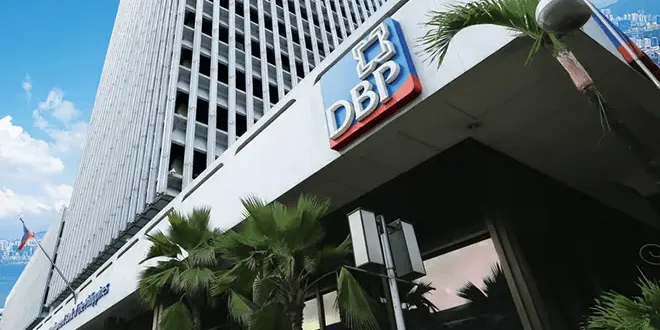
The Development Bank of the Philippines (DBP) has raised P8.25 billion from its latest dual-tranche bond issuance, surpassing its minimum target of P5 billion as investors showed strong confidence in the state-run bank’s role in advancing the country’s development agenda.
The fresh capital, raised under DBP’s expanded P150-billion bond program, was 1.65 times oversubscribed, according to DBP President and CEO Michael O. de Jesus, who emphasized that the successful offering reinforces the bank’s mission to fund more high-impact projects across the country.
“DBP’s latest successful mobilization of the capital markets allows it to expand its funding base and subsequently finance more projects and initiatives that complement President Ferdinand Marcos Jr.’s vision of sustaining long-term economic expansion and promoting greater financial inclusion,” said de Jesus.
DBP, the country’s 10th largest bank in terms of assets, channels credit support to four key sectors: infrastructure and logistics, micro, small and medium enterprises (MSMEs), the environment, and social services and community development.
The seventh tranche of its fixed-rate bonds consisted of P3.457 billion worth of 7A Bonds, which carry a 5.8751% interest rate and a three-year tenor, and P4.793 billion of 7B Bonds, which offer a 6.1454% interest rate per annum and a five-year tenor.
The bonds are listed and traded on the Philippine Dealing and Exchange Corporation, with China Bank Capital Corporation serving as the sole issue manager, arranger, and bookrunner.
De Jesus said the proceeds would support DBP’s general corporate requirements, including funding source diversification, balance sheet expansion, and increased support for strategic lending activities aligned with national priorities.
“This latest bond issuance is also reflective of the unwavering trust and confidence of the market in DBP as a strong and relevant government financial institution—one that plays a crucial role in advancing sustainable and inclusive economic growth, especially in unserved and underserved areas of the country,” he added.