 The Market Monitor Minding the Nation's Business

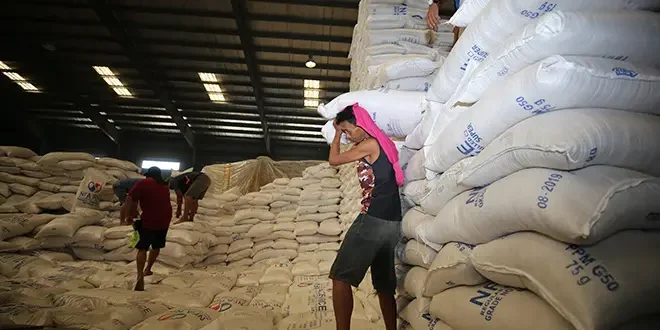
Aware of the huge cost in storing imported rice and buying new harvests of the local farmers, the Department of Agriculture has devised a scheme to compel accredited rice traders to hold part of the national rice reserves in their storage facilities as well as save part of their rice imports for government’s rice sufficiency program.
It envisions a 50-50 sharing between the National Food Authority and the accredited rice traders on the cost of storing the rice reserves (including imports by the private sector).
This strategy was explained to the senators by Agriculture Secretary Francisco Tiu Laurel Jr. as a means to strengthen food security without restoring NFA’s import monopoly.
“They have to have skin in the game. If we aim to have a 20-day rice buffer stock, we’re thinking of a 50-50 split between the NFA and the private sector,” the Star quoted Laurel saying.
Under the proposal, rice imports will follow a controlled model similar to the Sugar Regulatory Administration’s program, where only qualified traders are given allocations.
Importers will also be required to procure palay from farmers at fair prices for buffer stocking.
“With the private sector partly doing the buffer stocking, sourcing from local rice farmers, it will reduce the cost of buffer stocking for the government,” Laurel added.
Currently, the NFA can purchase only around five percent of national palay output for disaster relief because of limited warehousing and drying facilities.
Laurel said the DA must regain some regulatory control over imports to prevent oversupply, which has pushed farmgate prices down.
“Rice is a (political) commodity imbued with too much public interest to leave entirely to the private sector,” he said.
Before the Rice Tariffication Law was signed in 2019, the NFA had complete control of rice imports under its 1972 charter. It directly brought in shipments and determined which private traders could import, which was marked by inefficiency (from poor timing of arrivals) and corruption.
The RTL stopped the monopoly and opened up rice imports to the private sector by limiting NFA’s mandate to purely buffer stocking and emergency supply.
Tariff collections were redirected to the Rice Competitiveness Enhancement Fund to support farmers through mechanization, seed development, credit, and extension services.
Farmer groups have been complaining of depressed palay prices, while consumers continue to grapple with high retail costs.
He noted that if needed, the agency’s attached corporations, such as Food Terminal, Inc. (FTI) and Planters Products Inc. (PPI), could import on behalf of the government.
These are some of the agency’s proposed amendments, which also include integrating the NFA into the Enforcement Group.