 The Market Monitor Minding the Nation's Business
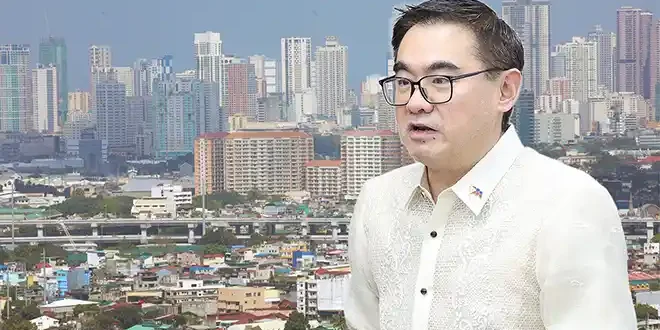
Government aims to render economic growth tangible by becoming an upper middle-income economy by 2026.
Department of Finance (DOF) Secretary Frederick Go said vigorous job generation efforts will enable government to achieve significant economic growth by next year.
Go explained that economic growth should translate into more jobs, subsequently improving Filipino workers’ incomes.
Go said “Our strategy is to grow the economy and make sure that no one is left behind. When you hurdle that rate, you become an upper middle income economy,”.
The Philippines has been categorized in the lower-middle-income bracket, which is defined by the World Bank as economies with a gross national income (GNI) per capita between $1,136 and $4,495.
GNI per capita rose to $4,470 in 2024, a 5.67% increase from $4,230 in 2023. GNI for upper middle income country starts at $4,486.
The Philippines missed the upper-middle-income country (UMIC) status in 2025 by just $26.
Go said government pledges to achieve UMIC status in 2026, insisting the President’s economic team commits to follow the timeline.
The Finance chief admitted foreign exchange fluctuations pose a challenge because income classification is denominated in dollars.
He said, “One of the problems is – it’s defined in dollars. So, even if we grow in pesos, if the foreign exchange rate works against us. That’s the problem.”
According to the World Bank, if the Philippine economy can grow by 6.8% annually for the next 25 years, it may finally end its extended stay as a middle-income country.
The World Bank said enhancing investments in infrastructure and human capital; improving regulations and governance; and mobilizing private capital – will provide a 1.4 percentage point boost to GDP growth to 6.8% annually from the current 5.4%.