 The Market Monitor Minding the Nation's Business
By HERMAN TIU LAUREL
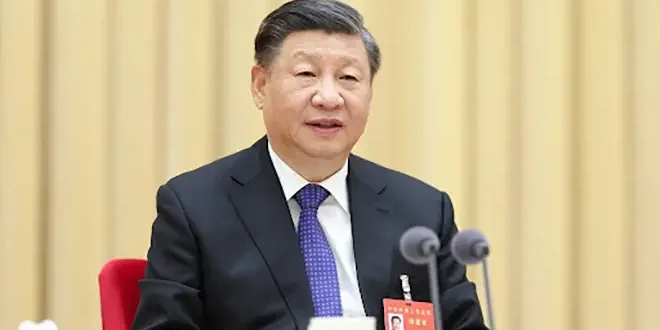
China has concluded its annual Central Economic Work Conference in Beijing, held from December 10, setting the economic direction for 2026—the opening year of the People’s Republic of China’s 15th Five-Year Plan (2026–2030).
After 75 years of sustained development, China’s economic planning remains consequential not only for itself but also for developing economies across Asia, Africa, and Latin America. In recent years, these plans have been closely watched as China adjusted to external pressures, including trade restrictions and tariff measures imposed by major economies.
China’s Successful economic planning.
Despite disruption from the global pandemic and intensified trade disputes, China sustained growth and significantly reduced reliance on the U.S. market by diversifying exports toward Asia and the Global South. This shift enabled China to record, for the first time, a trade surplus exceeding US$1 trillion, while stabilizing supply chains, providing affordable manufactured and high-technology goods, and expanding market access for imports from developing countries.
The Work Conference this year calls for more proactive macroeconomic policies, support for “new quality productive forces,” and—most relevant to developing economies—measures to boost domestic demand and further open China’s economy to imports. These policies are particularly important for the Global South, whose growth increasingly depends on access to large and expanding consumer markets.
China’s push to import more goods will benefit Asian economies, especially as the United States raises tariffs on multiple trading partners. ASEAN, one of China’s closest neighbors and largest trading partners, recorded trade exceeding US$1 trillion with China this year.
Trade frameworks strengthen this advantage. The ASEAN–China Free Trade Area (ACFTA) 3.0 and the Regional Comprehensive Economic Partnership (RCEP), which includes China as its largest market, have reduced tariffs by up to 92 percent.
PH needs China now
While several ASEAN economies are positioned to capitalize on these openings, the Philippines stands in contrast.
The Philippine economy is facing mounting pressures. Exports have been contracting: in 2024, Philippine merchandise exports declined by 0.5 percent, while exports of Vietnam, Cambodia and Thailand have scaled up.
By comparison, Philippine exports to China have continued to decline. Banana exports illustrate this trend clearly. The Philippines was ASEAN’s top banana exporter to China in 2019, shipping around 1.4 million metric tons at peak. By 2024, exports had fallen to approximately 460,000 metric tons. Meanwhile, the Philippines continues to import low-cost, high-quality, and high-technology Chinese products, contributing to a widening trade deficit.
Tourism reflects a similar pattern. Chinese tourist arrivals dropped from 1.8 million in 2019 to about 330,000 in 2024, resulting in an estimated US$1.5 billion loss in tourism revenues, even as neighboring countries actively restored their China tourism markets.
These sectoral declines have broader consequences. International financial institutions have revised down Philippine growth projections for 2026 and beyond.
The Philippine economy is entering a critical phase amid intensifying political pressures. Economic underperformance risks compounding social and political instability. Addressing this requires a strategic turnaround that prioritizes growth opportunities over geopolitical posturing.
China’s 2026 Economic Work Plan offers such an opportunity. The expansion of domestic demand, supported by state policy, will require reliable suppliers of food, agricultural products, consumer goods, and intermediate inputs—areas where the Philippines has capacity but has lost ground. To benefit, the government must adopt a focused and pragmatic strategy: re-engage on agricultural market access, align trade and investment promotion with China’s consumption-driven sectors, and depoliticize economic engagement in favor of national development objectives.
The opening is clear. Whether the Philippines chooses to step through it remains a matter of policy will and strategic clarity.