 The Market Monitor Minding the Nation's Business
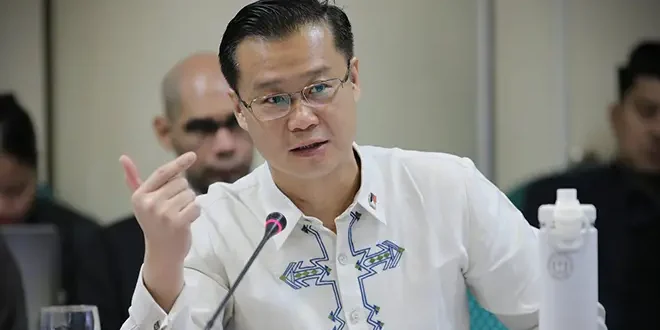
The public is being urged to stay alert as authorities warn of a spike in increasingly sophisticated “love scams” ahead of Valentine’s Day, with criminal syndicates now using artificial intelligence and advanced digital tools to deceive victims.
Senator Sherwin Gatchalian issued the warning on Friday following an advisory from the Cybercrime Investigation and Coordinating Center (CICC), which has flagged a rise in romance-related cybercrime cases targeting Filipinos looking for relationships online.
Data from the CICC showed 123 formal complaints involving love scams in 2025, with cases typically surging during the first months of the year—particularly January to February—as well as in June and October.
Authorities said these spikes coincide with periods when people are more inclined to seek companionship through online platforms.
“Despite the national ban on POGOs [Philippine offshore gaming operators], criminal syndicates continue to exploit loopholes through various schemes, including love scams,” Gatchalian said.
“Nakakalungkot na hindi na lang basta naloloko ang ilan nating kababayan ng perang kanilang pinag-hirapan, ang iba ay nagiging biktima pa ng prostitusyon,” he added.
Gatchalian warned that the growing use of artificial intelligence has made scams harder to spot, allowing perpetrators to generate convincing photos, videos, and messages to establish trust with potential victims.
He said targets are often emotionally manipulated over extended periods before being pressured to send money, disclose personal information, or participate in exploitative activities.
The CICC identified six common scammer profiles frequently used in love scam operations.
These include the “sad boy” or “sad girl,” who spins personal tragedies to solicit financial help; the “seducer,” who builds intimacy before demanding compromising images later used for extortion; and the “investor,” who lures victims into fake cryptocurrency or online investment schemes.
Other profiles involve the “serviceman,” posing as a military personnel stationed abroad; the “escort,” who asks for advance payments for supposed services; and the “slow burner,” who patiently nurtures a long-distance relationship before requesting money or favors.