 The Market Monitor Minding the Nation's Business
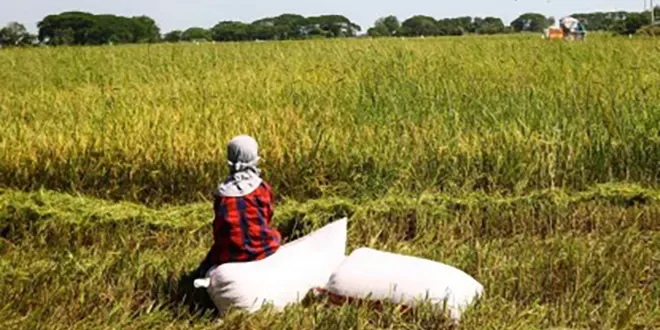
With the Philippine rainy season already in the offing and farmers are readying to plant their crops, particularly rice which is the principal agricultural produce for Filipinos, the problem of fertilizer supply has once again surfaced.
This developed as the three-week war between Israel and the United States on one side and Iran on the other showed no signs of waning, and Iran is now targeting oil refineries of Saudi Arabia, Qatar, United Arab Emirates and Kuwait.
Production of fertilizers and other petroleum-based chemicals have been suspended as a result of the war, and the global supply chain of these products were diminished by the closure of the Strait of Hormuz where one-fifth of the world’s oil passes.
A constrained global supply of fertilizers is now being felt all over the globe, particularly the Philippines.
Agriculture Secretary Francisco Tiu Laurel had met with Chinese Ambassador Jin Quan who assured him that China has not closed all doors as regards exportation of fertilizers.
Jin also said China will work with the Association of Southeast Asian Nations on energy security as the war in the Middle East continued its negative impact on global oil and gas supplies.
After the meeting, Laurel said he was able to receive from China solid assurances that it will not restrict fertilizer exports to the country.
China usually supplies around 18 percent of the Philippines’ fertilizer imports. It has become a critical supply buffer for the country after supplies from the Gulf were cut.
Earlier, Chinese Foreign Ministry spokesman Lin Jian said in Beijing that his country “stands ready to strengthen cooperation and coordination with Southeast Asian countries and jointly address energy security issues.”
Lin told reporters that Beijing would continue to sell some domestically produced fertilizer “to the international markets while meeting domestic needs.”
Natural gas is a key ingredient for nitrogen fertilizer, accounting for more than 70 percent of the total production cost.
Prices of natural gas have increased, and continue to rise as the Ramadan War in West Asia continues.
Meanwhile, Reuters reported that Secretary Tiu Laurel said the country is also in talks with India and Russia, and is planning discussions with Belarus regarding fertilizer supply.
Mr. Tiu Laurel said the Philippines, which imports most of its fertilizer requirements, had already secured 84% of its needs for this year, but the war in Iran has created uncertainty about whether contracted volumes will be delivered amid hits to supply and rising global prices.
“The war has shut down fertilizer plants in the Middle East and severely disrupted shipping routes, including the Strait of Hormuz, which could affect global supplies. The strait is a conduit for about one-third of global trade in fertilizer as well as 20% of oil shipments.
Bureau of Customs data shows the Philippines imported 7.1 million metric tons of fertilizers from 2021 to 2023, mainly from China, Indonesia, Malaysia, Canada, and South Korea. Nitrogenous fertilizers made up 63% of imports,” said Reuters. (Diego Cagahastian)