 The Market Monitor Minding the Nation's Business

By Rose Marie de la Cruz
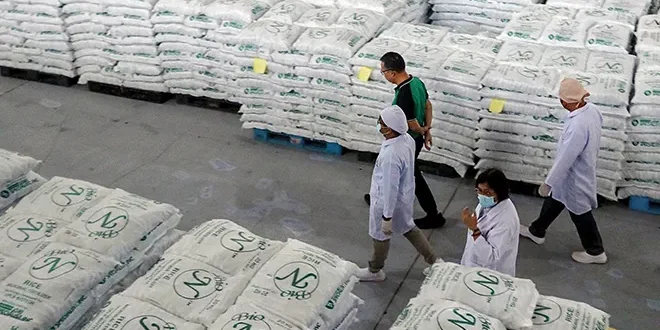
THE FUEL crisis triggered by the ongoing war in Iran is definitely affecting the food supply chain and energy programs of the world. Its negative impact in the Philippines is on food and energy supply which all depend on petrochemicals.
Prices of urea—the most used chemical fertilizer in our farms– have skyrocketed to $725 per metric ton last March compared to its level during the same period in 2025 of $394.5/mt.
The war in Iran– instigated by Israel with the full backing of the United States– brought this highest level for urea in nearly four years, according to a report of the World Bank.
Historical data from the bank indicated that the latest figures were the highest since the $925 per MT recorded in April 2022, when the Russia-Ukraine war caused spikes in the prices of the critical farm input, reported Business Mirror.
DAP (Diammonium Phosphate), aka 18-46-0, is the most widely used phosphorus fertilizer globally that is highly valued for its high nutrient content at 18% Nitrogen and 46% Phosphorus.
DAP, a granular, water-soluble, and alkaline-based fertilizer, provides essential phosphorus for root development, improves seedling establishment and promotes early plant growth, often yielding up to 40% increases in crops like maize.
DAP is used as a starter fertilizer for cereals (wheat, corn), vegetables, and fruits. It is applied as a basal dressing or incorporated into the soil at planting It performs best in neutral to slightly acidic soils as it temporarily increases pH around the granules.
It dissolves quickly in soil, releasing nutrients readily available to plants that makes it suitable for agricultural and horticultural crops. It is reported to be a cost- effective, high analysis source of phosphorus and nitrogen.
DAP prices averaged $658.3/MT, up by 7.02 percent from the $615.1/MT in the previous year. Fertilizer prices began increasing with the closure by Iran of the Strait of Hormuz, a critical chokepoint for global oil and fertilizer trade, prompting concerns about potential supply disruptions that would dent local output of staple grains like rice and corn.
What puzzles me is why we keep depending completely on DAP and urea because a bigtime importer is someone influential, hence the push for these chemical fertilizers to local farmers.
Right here, a Laguna-based company can supply the nitrogen needs of the entire farming sector– I mean rice, bananas, vegetables and fruits and horticulture– that uses what we all consider waste like talahib or wild grass that grows even without being cared for, even before the eruption of Mt. Pinatubo. When inoculated into the soil, the bacteria convert nitrogen from the atmosphere into a form plants can readily absorb.
In a previous column, former Socioeconomic Planning Secretary Cielito Habito explained that the unabated use of urea and other chemical fertilizers caused irreversible fatigue to the soil. He quoted Dr. Roehl Briones saying “napapagod na ang lupa.”
“Our respondents consistently cited declining per hectare rice yields over time, even as they applied more chemical fertilizers year after year. Many got less than 50 sacks of palay per hectare, less than half of what was commonly achieved under the Masagana 99 program in the 1970s. It was interesting how they described their soils to be “tired” or “weary” to explain the phenomenon, but it reflects the wisdom of those who had spent the good part of their lives eking out a living from tilling the soil,” Habito wrote.
Naturally, the land they were planting had degraded through time. Even scientists are pointing to the increased acidity from the persistent use of chemical fertilizers– that seeds and fertilizer traders offer in tandem to enlarge their market share.
The commercial fertilizers sold locally are by-products of petroleum processing, including the ammonia and sulfur– both of which are largely responsible for greenhouse gasses (GHG) that lead to global warming.
In contrast, organic fertilizers reduce soil acidity and provide soil nutrients like nitrogen, phosphorus, and potassium as they improve soil structure, retain more water, and increase helpful microorganisms in the soil, making the soil healthier and more fertile over time. Mother Nature does her work.
A local commercial product, called Bio N, improves the plant’s root system, boosts nutrient absorption, provides resistance to pests and diseases, and enhances soil conditions.
A kilo of Bio N costing P500 can yield nitrogen equivalent to two bags of urea, which at current prices cost more than P1,500 per bag. Between P500 and P3,000, the choice should be a no-brainer.
The DA adopted Bio N 20 years ago with the first application in a 2003 MOA with UPLB-Biotech for the latter to supply Bio N and the concentrates to the fertilizer mixers of the DA and LGUs.
But UPLB-Biotech lacked production capacity, and less than 1 percent of the country’s total biofertilizer needs were served all those years.
The breakthrough only came early last year, when UPLB signed a licensing agreement with Agri-Specialist Inc., a Laguna-based agribusiness company founded by distinguished UPLB alumnus Dr. Mario M. Labadan, to commercialize and distribute Bio N nationwide.
Labadan’s Agri Specialist Inc. invested in state-of-the-art equipment to permit Bio N production at a scale that could provide for up to all 7.2 million hectares of rice and corn lands in the country.
Bio N finds a parallel in the government’s balanced energy mix approach under its long-term energy plan for 2023-2050, wherein renewable energy sources would provide for energy security, apart from cleaner energy.
Just like Habito, I urge the DA to help the farmers by pushing local fertilizers– instead of imported petrochemicals– to ensure fertilizer security and enhance our long term food security. This local product would also create more jobs.