 The Market Monitor Minding the Nation's Business
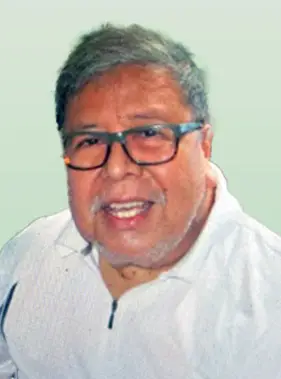
By DIEGO C. CAGAHASTIAN
The Department of Agriculture (DA) under Secretary Francisco Tiu Laurel Jr. should be commended for keeping an open mind and welcoming novel and tested ideas and technologies in the farm sector.
Even if other government officials and elected senators and congressmen are vehemently against China, thus effectively prohibiting the Philippines from sharing in the economic benefits this neighbor of ours is currently extending to the developing nations worldwide, Secretary Tiu Laurel recognizes that every new idea in farming that has been proven as effective and successful should be welcomed.
A report said the DA is now studying the use of smart farming technology from China aimed to modernize farming in the Philippines.
Tiu Laurel Jr. visited the Zhejiang Huihong Fruit and Vegetable Farm in China last Aug. 24, inspecting digital systems used to monitor crops and manage farm operations.
Zheng Yunyu, founder of Zhejiang Huihong Biotechnology Co. Ltd., briefed the Philippine delegation on the farm’s smart agriculture data platform, which integrates environmental monitoring, water and fertilizer management, and real-time production data. Officials also toured the farm’s greenhouses, examined fruit and vegetable cultivation practices at the grape and plum growing operation.
Tiu Laurel told Zheng that the Philippines should not hesitate to adopt farming approaches that have been proven elsewhere.
“We have to modernize agriculture, and we have to find the right technology that will allow us to leapfrog. There’s nothing wrong with copying the success of others,” he said, citing that there is a wide room for cooperation between the Philippines and China and expressed interest in translating the exchange into practical collaboration.
The DA said cooperation could focus on technology transfer and industry partnerships in precision agriculture, crop production, and ecological farming, noting that the bigger task would be determining which technologies can work economically and effectively in Philippine farms.
More important than the production of fruits and vegetables is the Chinese-developed technology on hybrid rice.
Yuan, 87, the Father of Hybrid Rice, is a hero of sorts in China and throughout the world by developing — thru research — more than 40 varieties of rice that grow well in various environments, actually preventing famine in many places.
He developed the first hybrid rice varieties in the 1970s. Hybrid rice has since been grown in dozens of countries, providing yields like 10,606 kilos per hectare in 1997 which was unheard of in those years.
Yuan recently set a new world record when his super hybrid rice yielded 17 tons per hectare. According to Yuan, if 50 percent of the rice paddies in the world were covered by rice hybrids, rice production could be increased by another 150 million tons which can feed 400 to 500 million more people.
Yuan’s technology was brought to the Philippines by the late businessman Henry Lim Bon Liong of Sterling Paper Group of Companies and SL Agritech.
Henry got lucky in getting the cooperation and know-how of preeminent Chinese agronomist Prof. Zhang Zhaodong.
Professor Zhang was recently awarded for his contributions to strengthening understanding and cooperation between the Philippines and China during the 2026 Award for Promoting Philippines-China Understanding (APPCU) held in Manila.
An outstanding expert in the field of hybrid rice in China, Zhang is formerly deputy director and associate researcher of the China National Hybrid Rice Engineering Technology Research and Development Center.
He is a student and follower of Yuan Longping, the Father of Hybrid Rice. In promoting Chinese hybrid rice to the world, Prof. Zhang became the first implementer of Yuan Longping’s vision to “develop hybrid rice and benefit people worldwide.”
Chinese Ambassador Jing Quan has cited Zhang’s work as an example of practical cooperation between the two countries. According to the ambassador, farmers adopting hybrid rice technology have seen income gains of around P40,000 to P60,000 per hectare annually.
“And the yield has gone up from 45 tons to 78 tons per hectare, which means about a 60 percent increase in farmers’ income,” he added.
It must be noted that the Chinese expert’s technological achievements received policy support from three former Philippine presidents — Joseph Estrada, Gloria Macapagal Arroyo, and Rodrigo Duterte.