 The Market Monitor Minding the Nation's Business
By Rose de la Cruz
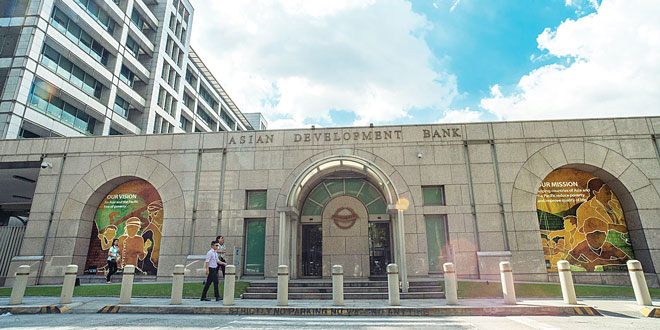
The Asian Development Bank, long regarded as a meticulous and prudent lender of mostly Asian governments, is facing intense scrutiny over its oversight in the controversial airport fee hikes, which had not passed through the Cabinet for approval, making President Marcos very angry.
A source of Bilyonaryo said industry stakeholders are asking why ADB– the Department of Transportation’s partner, consultant and adviser for the terms of reference in the bidding for the Ninoy Aquino International Airport rehabilitation– signed off on holding only one public consultation to discuss the significant increase in airport fees which could have an adverse impact on the country’s tourism and trade.
The DOTr held its only consultation on February 12, 2024, two months after the higher rates were already included in the Bid Bulletin circulated to potential bidders for the NAIA rehabilitation project, Bilyonaryo reported,
By that time, the fee increases were essentially finalized, with bids submitted on December 27. Despite ADB’s request to extend the bidding deadline to January 29 to attract more competitive offers, the DOTr did not comply.
During the consultation, stakeholders were left with unanswered questions due to the unavailability of the concession agreement and the confidential nature of the consultant’s data.
Just four days after the hearing, the DOTr awarded the project to a consortium led by San Miguel Corp., which offered to give 82 percent of airport revenues to the government.
At a follow-up meeting in May, stakeholders challenged the baseline airfare data presented by the ADB, which was used to justify the P1,000 increase in fees.
The ADB claimed the average airfare was P48,000, but stakeholders, citing industry data, argued the actual average was significantly lower at P23,776.
Both the ADB and DOTr have defended the sharp fee hike, noting that airport fees have remained unchanged since 2000.
In a similar development, Bautista said he is aware that the new parking rates imposed by the new NAIA Infra Corp. (NNIC) will discourage nontravelers from using the airport parking lot meant for passengers.
“If you look at it, the regular rates are not that high. Those who complain are those who used it for overnight parking. The airport [parking lot] should not be used for overnight parking. It is supposed to be for the passengers,” Bautista was quoted by Business Mirror.
Effective October 1, NNIC imposed a minimal increase to P50 from P40 for the first two hours of parking. However, for overnight and extended parking, a 24-hour stay will now cost P1,200 for cars, P480 for motorcycles and P2,400 for buses from the old rate of P300 for all vehicles.
The new rates have been significantly increased to discourage the use of the premier airport as a long-term parking facility. Also, it aims to optimize parking facilities by prioritizing parking for passengers.
These adjustments, the first in over a decade, are in line with Manila International Airport Authority Administrative Order 1 series of 2024 and approved through Cabinet Resolution 1, series of 2024.
This order, issued by the Manila International Airport Authority (MIAA) before NNIC assumed airport operations, is the result of a comprehensive review of fees for various regulated airport services.
NNIC said previous parking rates unintentionally encouraged misuse of the airport’s limited parking spaces. Many individuals, including those from nearby establishments and with no airport-related business, were taking advantage of the low rates for overnight or long-term parking. This created parking shortage for actual passengers, adding to congestion and frustration.
The new rates will not only prioritize passengers but also reduce congestion and improve efficiency, NNIC said.
“The goal is to optimize parking for our passengers. While the previous rates may have been convenient for some, they created significant disadvantages for travelers. We believe these changes will create a more efficient and passenger-friendly airport experience,” NNIC said.
NNIC plans to increase parking capacity by building new facilities, starting with Terminal 3, which currently accommodates 65,000 to 68,000 passengers daily.
Aside from parking fees, the passenger terminal fees will go up to P390 from P200 for domestic flights, and to P950 from P550 for international flights beginning next year. The said fees will increase in the sixth and eleventh year of the 15-year concession period, the Miaa earlier said.
Other upward adjustments include passenger service fees and the landing and take-off fees.
“Let’s give it a chance first. The AO is part of the concession agreement. But, as I mentioned earlier, we can review it. The dialogue with other airlines, with other stakeholders….But passengers won’t mind paying a little bit more than what they are paying now if you have very good airport experience,” added Bautista.
NNIC, the new operator of the country’s main gateway, will now start collecting higher landing and take-off fees from airlines. The increase is almost double, but the rates — the last increase was in the year 2000 — so for the last 24 years, there have been no increases in fees that were charged at the airport,” Bautista explained on the sidelines of the recent European Chamber of Commerce of the Philippines Aviation Summit 2024.
Bautista said that the imposition of higher landing and take-off fees is effective Oct. 1, or at least 15 days after the official turnover of the operations and maintenance of NAIA to its private operator, Business World added.
NNIC took over the operations and maintenance of the Philippines’ main airport on Sept. 14.
“The proposed revised fees, dues, charges and assessments for the use of the properties, facilities and services of the NAIA by the Airport Operator were approved through Cabinet Resolution No. 01 Series of 2024,” the Manila International Airport Authority (MIAA) said.
The imposition of higher landing and take-off fees does not necessarily mean that airfares will increase, Bautista said, adding that airlines have the option to absorb the higher fees or pass on the charges.
“The airlines won’t certainly like it, but I don’t think it would result in higher airfares since the take-off and landing fees are comparatively smaller compared with the other operations and maintenance costs of running an airline,” Nigel Paul C. Villarete, senior adviser on PPP at the technical advisory group Libra Konsult, Inc., told Business World.
For landing and take-off fees for international operations, an aircraft will be charged a minimum rate of $794, effective after one year.
Currently, aircraft weighing up to 50,000 kilograms will pay a fee of $2.48 per 500 kilograms, while those weighing 50,001 to 100,000 kilograms will pay a minimum rate of $248.12 or $3.11 per 500 kilograms or fraction thereof beyond 50,000.
Meanwhile, for domestic operations, an aircraft weighing up to 50,000 kilograms will be charged a minimum fee of P15,417 effective one year after the operations and maintenance contract.
For now, airlines with aircraft operating domestic operations will be charged P48.18 per 500 kilograms which will be increased to P154.17 after one year.
Further, an aircraft weighing 50,001 to 100,000 kilograms will be charged a minimum rate of P4,817.80 or P60.11 per 500 kilograms.
In March, the NNIC, formerly SMC SAP & Co. Consortium, signed a P170.6-billion contract to operate, maintain, and upgrade the country’s primary gateway for 25 years.
The NNIC plans to construct a new passenger terminal building with a capacity of 35 million passengers annually, as part of efforts to alleviate airport congestion.
The government anticipates earning P900 billion from the project, equating to P36 billion per year. This figure is 20 times larger than the P1.17 billion annually remitted by the MIAA over the 13 years through 2023, according to the DoTr.