 The Market Monitor Minding the Nation's Business
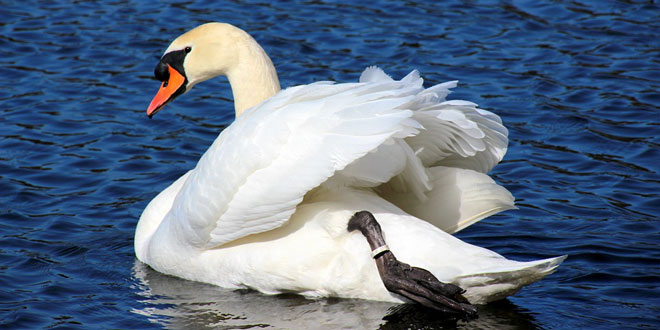
 Swans, for me, would have remained the images I conjured from art and literature—early on in the fairy tale, “Ugly Duckling”, and later, “Swan Lake”, the ballet (my first at the CCP in the 70’s with Russian prima ballerina, Maya Plisetskaya)—if a friend and I hadn’t chanced upon a herd by the entrance of Stanley Park on my first visit to Vancouver before I immigrated.
There, illumined at the Lost Lagoon framed by willow trees, a couple of swans afloat. I screamed for joy at the sight, by far more stunning than Plisetskaya, impersonating a swan, gazing perhaps only for minutes that felt like hours—a month ago at Centre Island in Toronto, seeing them again in the pond reprised the magical moment.
With their graceful long neck held up in a royal pose, this cousin to ducks and geese, considered the largest among waterfowls at 5 ft. in dazzling whiteness, do mesmerize. Indeed, for ages, the swan has been the absolute image not only of beauty and perfection, but also, of vulnerability—as in any ideal, beauty has its other side often manifested as selfishness or self-consciousness, drawing envy even hatred from others.
Consider these figurative representations in mythology and art: To gain the affection of Leda, wife of Tyndareus, Zeus transformed himself into a swan and succeeded in bedding her, according to Greek mythology. Their swan-child, could not but be the “most beautiful woman in the world”, the Greek King Menelaus’ wife, Helen, whose abduction by Paris of Troy, his prize from Aphrodite, caused the Trojan War. Earlier, Paris had chosen Aphrodite over Hera and Athena as the most beautiful in a test Zeus gave him. In revenge, both miffed goddesses machinated the ruin of Troy.
Destruction wrought by beauty also fuels the drama in “Swan Lake”, the breathtaking ballet with gripping scenes where the vulnerable, gentle white swan, Odette—actually the Princess Odile transformed into a swan by her father—and the deep black Odile, her alter-ego, vie for Prince Sigfried’s affection to prove her father’s test of eternal love; Odette does by choosing to die rather than lose her prince.
Had I not strayed to Stanley park, and circled the lagoon’s edge, intruding into where the swans feed and nest, only a few feet away, Odette and Odile would have remained the only “real swans” for me. But, almost within touch, they seemed less awesome—squatting on the ground with edges of their wings dirtied, they looked shabby, their cygnets, not yet snow white but beige-y with stubs for feathers, more like large chicks with short necks, I just then realized, as “ugly ducklings”. I had noted familial groupings though with two adults caring for the cygnets—that would be a pen and her cob, a bird enthusiast volunteered to identify the parents. They mate for life, he added, which makes them fiercely loyal and over-zealous.
Even if mostly migratory, their loyalty extends to their habitat; the swans at Stanley Park without doubt, according to the bird enthusiast, could be the same that had been hatched from only three or five eggs twenty years ago, later mating and having their own cygnets. Vancouver swans pose a contrast with mute wild swans elsewhere in North America and Europe— temperate zones where they survive—especially at Prospect Park and Sheepshead Bay in Brooklyn, New York. In numbers alone, the difference separates about 200 Vancouver swans soon pinioned or clipped in the wings, disabling them to fly farther than the lagoon (to protect them from predators), from the 2,200 in Brooklyn that are let alone in their wildness.
The first pairs brought to North America by Europeans in 1800s “installing them like ornaments on the private estates of aristocrats, who prized their striking features,” as described in a Daily News report, had since started to clash apparently for survival with humans, who now call them, “winged bullies”, sinister and outright aloof, and in flight, especially when they swoop down with a wingspan of 10 ft., they could be frightful.
The NY Department of Environmental Conservation claims that swans have been ruining waterways and lakes like Prospect Park, where they feed on submerged vegetation, driven away native wildlife species, polluted the water, and when in flight, pose a hazard to aviation. The verdict, then, to kill them, had environmentalists up in arms against it, of course.
A standoff started two years ago, which activists against the killing had hoped could possibly drag on until 2025, the date set for it, has been recently delayed by two years, in a moratorium bill Assemblyman Steven Cymbrowitz (D–Sheepshead Bay), introduced, pending completion of a study “on their harmful effects to the environment as state scientists claim,” according to Courier’s Life Brooklyn Today. He considers swans “tried-and-true New Yorkers” like the city’s many immigrants.
As for me, forever the dreamer, I can’t see the swan as real in this truly horrific news; in fact, it strikes me like another legend where in the end, or in death, they all float on an upwind in their awesome beauty.