 The Market Monitor Minding the Nation's Business
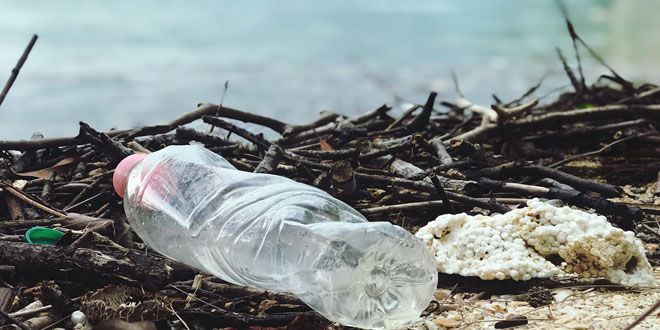
Oceana Philippines, a marine conservation advocacy group, together other civil society associations, plan to file charges against the National Solid Waste Management Commission (NSWMC) for failing to address the country’s plastic pollution problem.
Oceana vice president Gloria Estenzo Ramos said, “More than two weeks have passed, and we are still waiting for the responses of government agencies. If they do not provide the necessary mandated action to mitigate this huge problem of plastic pollution, then we will pursue all available legal remedies as provided for by the Constitution and the various laws in the country.”
Under Republic Act 9003 or the Ecological Solid Waste Management Act of 2000, the NSWMC is mandated to prepare a list of Non-Environmentally Acceptable Products and Packaging (NEAPP) within a year after the law’s effectivity and updates every year thereafter.
The commission is composed of 14 national government agencies and private sector representatives.
Oceana stressed that the manufacture, distribution or use of non-environmentally acceptable packaging materials and the importation of consumer products packaged in non-environmentally acceptable materials are prohibited under Section 48 of RA 9003.
Ramos emphasized that several countries are already taking action to reduce microplastics in the environment, but the Philippines has not taken sufficient initiative towards this goal.
“While the Philippines has a law regarding solid waste management, implementation by concerned government agencies remains lacking,” Ramos said.
The Oceana official cited data from the Waste Assessment Brand Audit 2019 report of the Global Alliance for Incinerators Alternatives (GAIA) which showed that the country produced daily 164 million pieces of sachets, 48 million shopping bags, 45.2 million pieces of “labo” bags or thin transparent plastic bags.
Oceana had been urgently pleading for government to act on worsening plastic pollution in our seas due to its critical threat to our food security.
Ramos said the primary source of the marine plastic pollution problem is single-use plastic that takes thousands of years to decompose, effectively destroying the environment.
Ramos added, “Even larger plastics such as polyethylene plastic bags cause direct threats to whales and turtles as they get inadvertently ingested and cause blockages to the gut.”
Australian fishery veterinarian Matt Landos said plastics in general contain hazardous chemical additives that can combine with other toxic chemicals from other water pollutants.
Some of the toxic chemicals, he said, remain in the environment for decades and build up in the food chain.
Landos, director of the Future Fisheries Veterinary Service based in New South Wales, added that microscopic life such as zooplanktons found at the bottom of marine food webs confuse the plastic particles for food, contributing to their malnutrition and exposing the fish and the food chain, including fish eaters, to toxic chemicals.
“Zooplanktons are important in the aquatic food chain as these provide the first meal for the fish in their early life. Those aquatic creatures that rely upon these zooplanktons further up the food chain suffer in a knock-on domino effect of starvation,” Landos said.
Lando quoted from a recent report by the International Pollutants Elimination Network (IPEN) that said microplastics have already been detected in marine organisms from plankton to whales, in commercial seafood, and even in drinking water.
According to the report, most plastic chemicals are toxic, and microplastics attract, concentrate and magnify other persistent toxic chemicals from the surrounding aquatic environment onto their surfaces.