 The Market Monitor Minding the Nation's Business
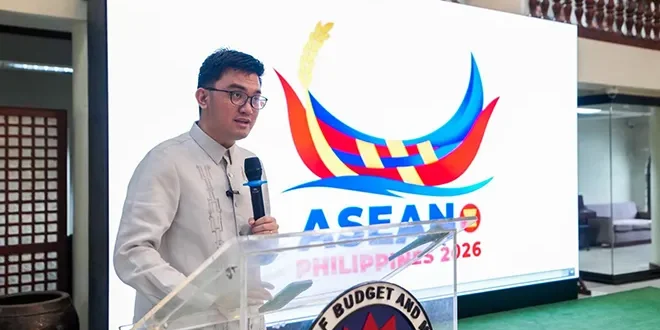
The Philippines is pushing for sweeping public procurement reforms across Southeast Asia to make government spending more transparent, expand business opportunities and strengthen investor confidence, as it leads regional efforts to improve economic competitiveness.
Acting Budget Secretary Kim Robert de Leon called on Association of Southeast Asian Nations (ASEAN) member-states to streamline procurement procedures, promote fair competition and strengthen accountability to ensure public expenditures translate into tangible economic and social benefits.
Speaking at a high-level regional dialogue on Wednesday, De Leon proposed three priority areas for cooperation: wider adoption of digital procurement and open contracting, increased participation of micro, small and medium enterprises (MSMEs), and expanded technical exchanges among government procurement professionals.
He said simplifying requirements and improving access to procurement information would allow more businesses, particularly smaller enterprises, to compete for government contracts.
De Leon emphasized that procurement efficiency should not be measured solely by how much government saves but also by the quality of projects and services delivered to the public.
The Budget chief cited Republic Act No. 12009, or the New Government Procurement Act, signed by President Ferdinand R. Marcos Jr. in 2024, as a major step toward modernizing the country’s procurement system.
The law promotes value for money, digitalization, open contracting, public participation and more efficient government purchasing procedures.
Digital procurement initiatives have already generated more than ₱1 billion in savings, De Leon said, potentially freeing up funds for education, healthcare, infrastructure and other essential services.
He also highlighted the Department of Budget and Management’s (DBM) Centralized Open Monitoring Platform for Appropriations and Spending Statistics (COMPASS), which seeks to give the public greater access to information on government budget allocations, fund releases and expenditures.
The agency is exploring the platform’s integration with the government’s e-Gov application, which could enable citizens to verify reported project accomplishments and submit feedback.
De Leon said procurement reforms must ultimately deliver shorter processing times, greater competition, savings and improved public services, stressing that government accountability extends beyond signing contracts to ensuring projects are completed and benefits reach their intended recipients.
The Philippines also received recognition at the 2025 Open Government Partnership Global Summit in Spain, earning the Asia and the Pacific Regional Award and the Open Contracting Thematic Award.
Organized by the Procurement Service-DBM, with funding from the European Union and technical assistance from the United Nations Development Programme Philippines, the ASEAN dialogue gathered government officials, development partners, business representatives and civil society organizations.
The discussions form part of the Philippines’ 2026 ASEAN Chairship and seek to establish stronger regional cooperation in making public procurement a driver of investment, competitiveness and inclusive economic growth.