 The Market Monitor Minding the Nation's Business
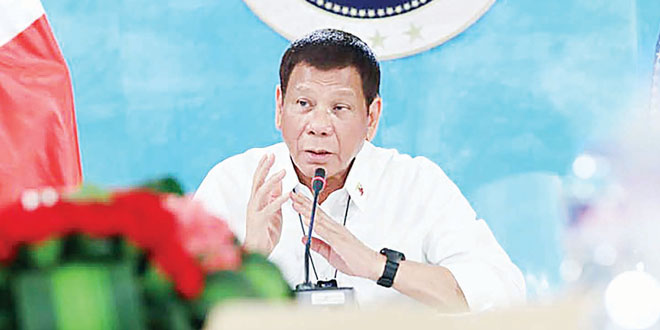
President Rodrigo Duterte failed to fulfill his 2016 election campaign promises to end crime, corruption and illegal drugs within three to six months once he becomes president, according to a study by the Ateneo School of Government.
Edilberto de Jesus, former Education Secretary and main proponent of the Ateneo study, said, “The President overestimated, exaggerated, hyped up the scale and gravity of the problem, which is already serious, and he underestimated the challenge of dealing with the problem on a national basis.”
He said the Duterte administration perceived the drug problem as merely a law enforcement issue instead of listening to expert advice that it is also a public health and economic issue.
De Jesus added that the considerable powers granted to police officers in conducting the government’s anti-drug campaign exposed weaknesses in the Philippine National Police.
He said the drug war made extrajudicial killings (EJK) worse, as not only drug addict suspects were targeted but also leftist activists and their lawyers.
De Jesus said, “Ang nagiging epekto ng drug war sa kapulisan mismo ay maaaring marami ang naniniwala na makakalusot sila kahit papaano dahil sa mayroon silang ‘blank check’ sa kung anong kailangan nilang gawin. At iyong EJK ay lumaganap na rin kaya nabahala na rin ang Department of Justice.”
He said the President was also criticized for his appointees, that no investigations were conducted over fired appointees and some were even recycled into other government posts.
“All fired officials [appointed at the beginning of Duterte’s term] as well as others who later had to resign under public pressure were close to Duterte. Their separation from the service seemed to make good the President’s threat to dispose of officials tainted by even a whiff of corruption. But no investigation or charges followed from the sacking, and the favorable impression gained by their dismissal quickly dissipated when they began surfacing in other government offices,” de Jesus said.
On the issue of transparency, the President has repeatedly refused to disclose his SALN or Statement of Assets, Liabilities and Net Worth.
Despite the issuance of Executive Order 2 or Freedom of Information Act, de Jesus said the early attempt to push for greater freedom of information in the government appeared to be a case of “ningas kugon.”
After five years, the issues of crime, corruption and illegal drugs still persist and have not been sufficiently addressed, de Jesus said.
“There are still a lot of problems that the country is facing, and he has to answer them, and we need to be on the lookout for how he will address these problems. He is still accountable; he is still responsible for these issues,” de Jesus said.