 The Market Monitor Minding the Nation's Business

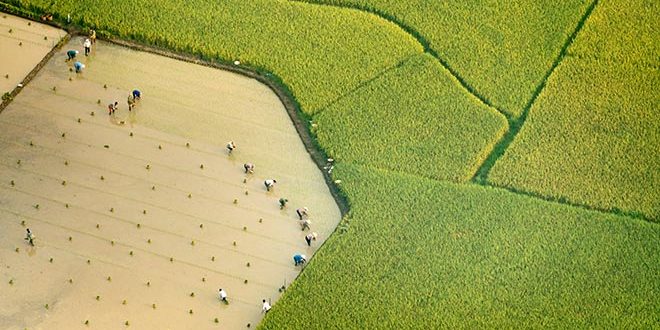
In many parts of the world, rice farmers are getting weary of traditional farming – or those needing hybrid seeds which require heavy chemical fertilization (including weedicides, fungicides, herbicides and insecticides), a lot of irrigation water and labor-intensive activity.
Many have shifted– either on experimental basis or as a regular livelihood – to a System of Rice Intensification (SRI), which makes production grow even with less water, the use of organic materials (usually farm wastes, including rice hulls and leaves), biofertilizers and different farm practices to ensure health plant growth.
A one-day SRI Global Forum last October that was attended by practitioners from 50 countries was held Friday at the Apacible Hall of the Department of Agriculture. The forum highlighted the importance of weaning farmers away from the destructive traditional planting, including the use of chemical fertilizers, pesticides, weedicides and herbicides that harm not just the farmers but also the environment.
The SRI Global Forum– the first one held in the country– saw the participation of Nigeria, Iraq, India, Australia and other Asean member countries with speakers explaining their difficult climb to scaling the SRI program in their respective countries.
Agriculture Undersecretary Leocadio S. Sebastian for Rice Industry Development narrated that the SRI program in the Philippines often referred to as UFO (unidentified field observation) several decades ago continues to be struggling because farmers stuck to conventional ways of planting with the use of chemical fertilizers.
He said Congress has just granted the SRI program a budget of P250 million for 2024.
The keynote was delivered by Prof. Norman Uphoff of Cornell University and lead convener of SRI International.
Dr. Khidir Hameed of Iraq, a country with severe lack of water for farming explained how SRI worked in their fields despite less water. He said, with El Nino, SRI becomes more urgent to ensure the country’s rice production even at a much-reduced water level would not suffer and so it won’t import all of its rice requirements.
SRI is now being scaled in most of the 50 countries that adopted it as a way of addressing rising production inputs costs, water insufficiency (because of past and coming El Nino) and to help stop soil degradation from years of chemical fertilizers application.
Since agriculture contributes to climate change, it is also the sector most vulnerable to climate change impacts. Part of the critical adaptation to climate change is the capacitation of farmers on resiliency strategies.
Through the Climate-resiliency Field School (CrFS), farmers’ education and technology sharing and experiential practice of technologies are propagated, particularly in water-deficient and rainfed areas.
CrFS is flexible and experiential and promotes learning across sustainability principles, economically-rewarding, low-carbon agriculture and climate-informed farming practice.
The learning farm included a study on adapting local varieties through participatory varietal selection, a comparison of organic farming and farmers’ practices in the area and the SRI farming methods.
The SRI way calls for direct seeding and, depending on the farmers’ beliefs, organic farming or when feasible, a mix of application of organic and chemical fertilizers. But the SRI practitioners present at the forum were staunch advocates of purely organic farming.
Observations raised by the forum delegates were:
- The utilization of SRI is expanding in various Asian and other countries but it is still a work in progress.
- SRI provides an opportunity for farmers to learn continuously about a more efficient and effective system of rice production.
- Successful utilization of SRI for other crops has been documented in several countries as shared by several country-representatives.
- There should be more promotion of SRI thru the provision of government and institutional support as well as regional cooperation (example sharing of best practices) to expand its application.
- The evaluation and updating of SRI principles is a continuous process.
- There are a variety of adaptations of SRI. It should be noted that what is important is the use of the SRI principle rather than the technology itself.
- The ultimate goal is the attainment of a productive, sustainable and environment-friendly production practice that recognizes the importance of proper ecological management. (RdlC)