 The Market Monitor Minding the Nation's Business
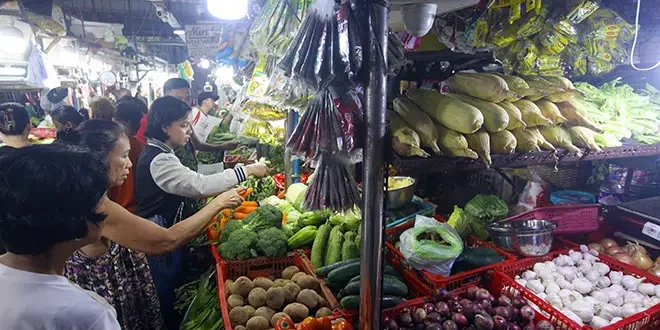
The country’s inflation rate remained unchanged at 1.7 percent in October 2025, as slower increases in food and beverage prices offset higher costs in utilities and services, the Philippine Statistics Authority (PSA) reported Wednesday.
The latest figure was lower than the 2.3 percent recorded in the same month last year and brought the 10-month average inflation to 1.7 percent — well below the Bangko Sentral ng Pilipinas’ (BSP) target range of 2 to 4 percent.
National Statistician Undersecretary Claire Dennis Mapa said October’s inflation was mainly driven by higher prices in housing, water, electricity, gas and other fuels, which rose to 2.7 percent from 2.1 percent in September; as well as restaurants and accommodation services, which increased to 2.4 percent. The food and non-alcoholic beverages index posted a modest annual uptick of 0.5 percent.
Core inflation, which excludes volatile food and energy items, eased slightly to 2.5 percent from 2.6 percent the previous month, but remained higher than October 2024’s 2.4 percent.
Mapa said the latest inflation data is expected to support consumer spending in the coming months. He added that falling prices of key commodities, such as rice, helped temper inflation, although risks remain from possible price spikes in vegetables and fuel due to weather disturbances and global market movements.
“These are the items we are monitoring since these could exert upward pressure on inflation moving forward,” he said.
Meanwhile, Department of Economy, Planning, and Development (DEPDev) Secretary Arsenio Balisacan attributed the slower food inflation — down to 0.3 percent from 0.8 percent in September — to government efforts to stabilize supply and manage price pressures.
He cited interventions such as the augmentation of rice supply and the Department of Agriculture’s decision to allow the importation of certain vegetables to cushion the effects of bad weather on local harvests.
“The steady headline inflation rate shows that our coordinated interventions are helping to maintain adequate supplies and keep essential goods affordable,” Balisacan said. “We remain vigilant in managing risks from weather disturbances, global market volatility, and other domestic factors that may affect prices in the coming months.”
Balisacan also underscored the positive impact of Executive Orders (EO) 100 and 101, which aim to strengthen food security. EO 100 sets the floor price for palay (unhusked rice) to ensure fair returns for producers, while EO 101 directs agencies to fully implement the Sagip Saka Act, or Republic Act 11321, to promote enterprise development among farmers and fisherfolk.
“These policies help ensure fair returns for our farmers and fisherfolk, encouraging domestic production,” he said. “At the same time, the government continues to improve post-production and distribution systems to stabilize food prices and protect consumers.”