 The Market Monitor Minding the Nation's Business
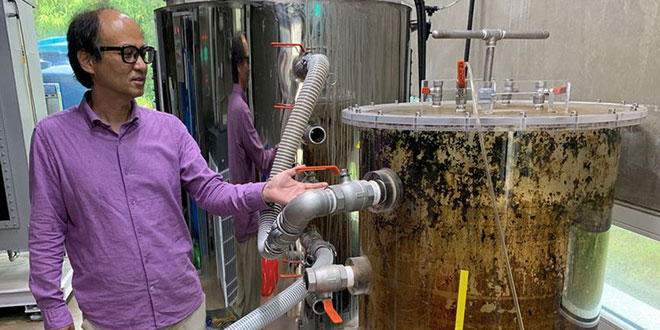
A South Korean engineer developed a toilet that pays users with digital currency and converts human waste to energy.
The toilet – called Beevi – is currently installed at the Ulsan National Institute of Science and Technology (UNIST), where human waste powers one of their buildings.
The eco-friendly toilet is connected to a laboratory that converts excrement to biogas.
Professor Cho Jae-weon, who designed the toilet, said, “If we think out of the box, feces has precious value to make energy and manure. I have put this value into ecological circulation.”
Cho explained that feces are collected through an underground tank via a vacuum, vastly reducing water requirement every time the toilet is used. Active microorganisms break down the collected excrements, turning them into methane gas which is used to power “a gas stove, hot-water boiler, and solid oxide fuel cell” inside the university.
A ordinary person defecates an average of 500 grams per day, which produces up to 50 liters of methane gas. This is enough to generate about 0.5kWh of electricity or to drive a car for nearly 1.22 kilometers.
To encourage students to use Beevi, Cho devised a system of rewarding users with digital currency called Ggool, or honey in Korean. A person earns 10 Ggool for each day of use.
UNIST students use the Ggool to buy freshly brewed coffee, instant noodles, books and even fruits inside the campus. The university put up a unique shop inside the campus where students can pay with Ggool for their purchases.
Heo Hui-jin, a post-graduate student at UNIST, said, “I only thought that feces is dirty, but now it is a treasure of great value to me. I even talk about feces during mealtimes when I think about buying a book I want.”
Social media netizens and cryptocurrency users who learned of Beevi called Ggool as “the king of shitcoins.”