 The Market Monitor Minding the Nation's Business

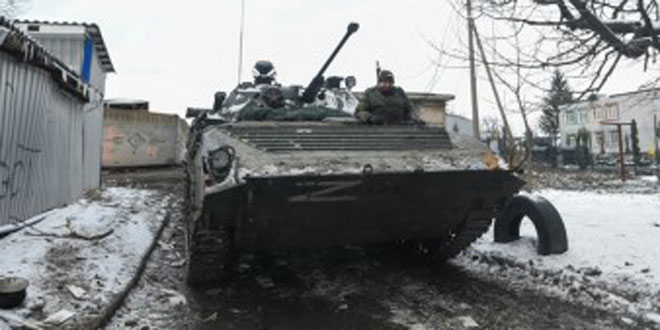
The Philippines will need to prepare for the inevitable impact of the war in Ukraine should the crisis drag out, according to the Department of Finance (DOF).
Finance Secretary Carlos G. Dominguez III gave this determination to representatives of the Asian Development Bank (ADB) and the World Bank who Dominguez urged to craft “rescue packages” for economies that may be affected.
The Finance Secretary plans to discuss with finance ministers from other countries in the region on how their respective governments can cooperate towards mitigating the economic impact of Russia’s invasion of Ukraine.
Dominguez said, “I’ve started discussions with the ADB and the World Bank. I said they came together very well in the financing of the vaccines for the pandemic. I said, you know, this is another opportunity for you guys to work together and work together with the finance ministers involved. To see what kind of rescue packages that can be done particularly for the less developed countries.”
Dominguez added that the war in Eastern Europe “weighed heavily” on the Philippines, as seen with the recent increase in prices of fuel and grains.
The war’s impact was initially seen only on oil prices. As the war progressed, international oil prices breached the $100 per barrel limit. This spurred a hike in inflation that drove spikes in other commodities.
Both Ukraine and Russia are global suppliers of wheat which the Philippines does not grow. Other commodities coming from the two countries such as soybean and potash, one of the key ingredients in the manufacture of fertilizers, have also sent food prices soaring.
“We were well on our way to recovery, except now we have this Ukraine crisis, and that’s going to weigh heavily on us. Although we’re not combatants, we’re affected by the increase in prices of fuel, of grain. This is among the things we discussed at the World Bank and the G-20 meetings,” Dominguez said.
Apart from the war, a major stumbling block to the country’s recovery is its debts. Dominguez said the next administration must implement measures that would ensure that the Philippines outgrows its debts.
Dominguez said that while the country’s debts have terms of up to 40 years and were negotiated on “very favorable” terms, the Philippines can only outgrow its debts by posting a growth of at least six percent in the next five to six years.
During the recent plenary session at the Southeast Asia Development Symposium (SEADS), Bangko Sentral ng Pilipinas (BSP) Governor Benjamin Diokno said the country’s current debt comprises 70% local and 30% foreign.
Diokno expects the economy to grow this year by seven to nine percent, outpacing the growth of its debts. He said debt is expected to grow by around two percent this year.
Diokno expects the economy to perform well this year because the country “did not sit by” and wait for the pandemic to recede before it took action on much-needed reforms.
He cited the enactment of such laws as the Retail Trade Liberalization Act, the Public Service Act, and the Foreign Investment Act which will significantly improve the country’s efforts to attract foreign capital.
Diokno added that the country’s reserves are equivalent to 10 months’ worth of our imports. He said the generally accepted principle is for the economy’s foreign reserves to be equivalent to three months of imports.
The country’s exports, earnings Business Process Outsourcing (BPO) firms and OFW remittances help ensure the country has ample reserves and growth drivers.