 The Market Monitor Minding the Nation's Business
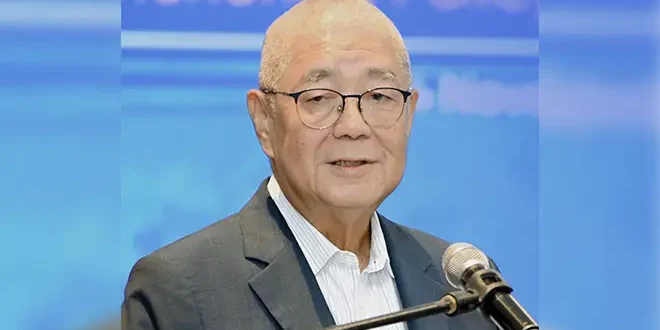
Bangko Sentral ng Pilipinas (BSP) Governor Eli Remolona Jr. has given up on monetary policy as principal driver of economic growth.
Remolona said monetary policy has reached the limits of its effectiveness in reviving the Philippine economy, shifting the burden to the legislative and executive departments of the government to implement fiscal reforms and address governance failures.
He stressed that while the central bank is doing its part to lower borrowing costs, interest rate cuts alone cannot compensate for the structural issues that triggered the sharp economic slowdown in 2025.
“We have very limited tools in monetary policy. We’re at the point where monetary policy cannot do much more,” Remolona said in a One News interview on Friday, Feb. 20.
Remolona’s statements follow the Monetary Board’s decision to reduce the key policy rate by 25 basis points to 4.25 percent, a move aimed at cushioning an output slump that the central bank had previously failed to anticipate.
Reactions
The BSP governor’s statement elicited various reactions from the public and the netizens in social media.
Manila Times columnist and political analyst Ana Malindog-Uy posted on Facebook that “what BSP Governor Eli Remolona is basically saying is this: Monetary policy (cutting interest rates, adjusting liquidity, managing inflation expectations) can support growth, BUT IT CAN’T CARRY the economy anymore when the main drag is non-monetary: WEAK CONFIDENCE (referring to investment climate), GOVERNANCE PROBLEMS (this includes massive corruption in government), and STRUCTURAL BOTTLENECKS.”
What are the structural bottlenecks likely being referred to?
Malindog-Uy listed some of them:
1. Governance and Institutional Weakness: These include weak procurement systems and corruption leakages, regulatory unpredictability, slow judicial processes, inconsistent policy implementation, and weak contract enforcement. This is a credibility bottleneck.
2. Public Investment Efficiency Problem: The Philippines does spend on infrastructure, but project execution delays remain chronic, cost overruns are common, logistics costs remain among the highest in ASEAN, and urban congestion (especially in Metro Manila) remains unresolved. This is a productivity bottleneck.
3. Weak Industrial Base: The Philippine economy is still heavily consumption-driven, remittance-supported, and services-dominant (BPO, retail, real estate). Manufacturing share remains relatively shallow compared to Vietnam or Thailand. Without strong tradable sectors, growth is vulnerable to domestic confidence shocks, job creation remains uneven, and external balance becomes fragile. This is a structural transformation bottleneck.
4. High Cost Structure: Businesses in the Philippines face high electricity costs (among the highest in ASEAN), expensive logistics and port fees, red tape at the LGU level, and regulatory fragmentation. When structural operating costs are high, lower interest rates do not meaningfully change investment decisions. This is a competitiveness bottleneck.
5. Human Capital Mismatch: This refers to education quality concerns, skills mismatch with industry needs, and productivity gaps relative to regional competitors. This limits high-value manufacturing and the expansion of advanced industries. This is a labor productivity bottleneck.
6. Fiscal Space Constraints: Public debt (17.7 trillion pesos) levels are elevated compared to pre-pandemic years. This limits aggressive fiscal stimulus, large-scale industrial policy, and countercyclical spending. If fiscal reforms are weak, markets demand higher risk premiums. This is a macro-fiscal bottleneck.
7. Political Uncertainty and Confidence Erosion. This is the transmission mechanism issue. When political noise, massive corruption allegations, or policy uncertainty rise, business confidence falls, private investment pauses, and households save rather than spend. Lower rates cannot fix trust. This is a confidence bottleneck.