 The Market Monitor Minding the Nation's Business
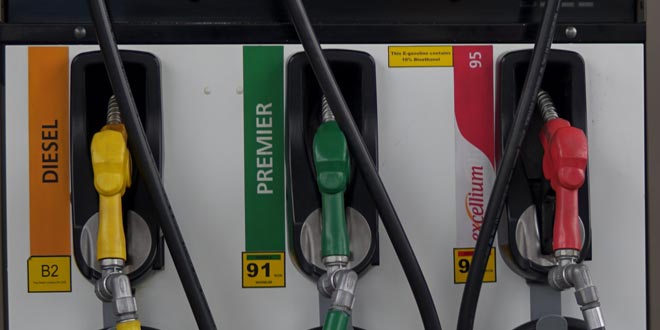
Sharp rise in the prices of oil and food will be experienced by various Asian economies due to the Ukraine-Russia war, with the Philippines expected to be badly hit, according to the Japan-based global investment firm Nomura.
“Although ongoing geopolitical tensions between Russia-Ukraine can hurt Asia through multiple channels, such as tighter global financial conditions, elevated uncertainty and the risk of weaker global demand, higher commodity prices are the most important transmission channel,” Nomura said in a recent report.
Brent crude oil prices, which are now over $100 a barrel, reflect the geopolitical risk from the conflict, it said.
Russian forces launched a land, sea and air invasion of Ukraine February 24.
According to Nomura, food prices are already rising because, one, Russia is one of the world’s biggest producers of wheat and corn, and two, because of the impact of higher oil prices on transportation, fertilizer and feedstock costs and biofuel substitution.
The fallout from the war will be deeply felt in Asia, where most nations import oil, and food and energy account for roughly half of emerging market consumption expenditure, it said.
“In Asia, India, Thailand and the Philippines are the biggest losers, while Indonesia would be relative beneficiary from higher commodity prices,” Nomura said.
It sees rising inflation hurting Thailand, where food and energy accounts for 52.7% of the consumer price index or CPI, India (45.9%) and the Philippines (43.4%).
Because most Asian consumers have not fully recovered from the effects of the COVID-19 pandemic and have seen their savings shrink, inflation could put a squeeze on real disposable earnings, weakening consumption rebound, Nomura said.
The impact could be disproportionately felt by lower-income households.
“We also see risk to corporate profit margins, as the entire input cost burden is unlikely to be passed on to consumers. For a 10% oil price rise, GDP (gross domestic product) growth could be 0.2pp (percentage point) weaker in India and 0.1pp lower in the Philippines and Thailand,” Nomura said.
A major component of the country’s balance of payments, the current account consists of transactions in goods, services, primary income and secondary income. It measures the net transfer of real resources between the domestic economy and the rest of the world.
Meanwhile, the Department of Foreign Affairs (DFA) called on the international community to reaffirm its commitment to the Manila Declaration on the Peaceful Settlement of International Disputes
“The Philippines calls on the international community to reaffirm by more than words its commitment to the peaceful settlement of disputes,” the DFA said.
The Manila Declaration “provides the legal framework for recourse to diplomacy, dialogue, and rule of law,” the DFA said.
“In the present crisis, where the situation is not irreversible and there is no compelling reason for any of the protagonists to resort to hostile actions, turning to the Manila Declaration is the pragmatic and decent way to go. We urge all parties to exert every effort to stick to diplomatic and peaceful means to maintain international peace and security and avert a humanitarian crisis,” the DFA added.
There are about 380 Filipinos in Ukraine, most of them in the capital Kyiv.
Last February 18, six Filipinos arrived home from Ukraine. Four boarded international flights from Kyiv, the others from the western Ukraine city Lviv. Philippine Ambassador to Poland Leah Basinang-Ruiz said the embassy in Warsaw provided fund assistance to the six Filipinos who requested to be repatriated.