 The Market Monitor Minding the Nation's Business

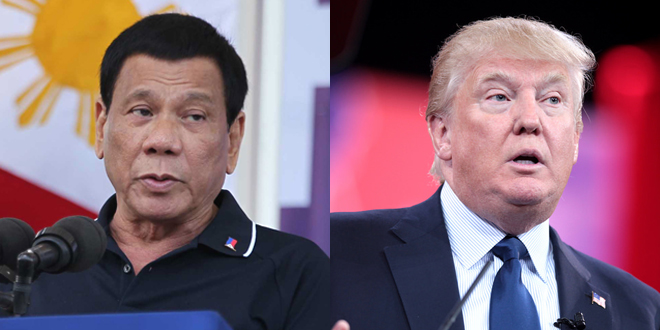
 As in the phenomenon of non-violent revolutions, the concept of a peaceful anti-establishment movement seemed to have had its first appearance among Filipinos. The Edsa People Power Revolution predates the Velvet Revolution in Czechoslovakia, the Occupy Wall Street Movement in New York, the United Kingdom’s Brexit and the Forgotten Man mandate of Donald Trump.
Originating as localized street congregations turning into rallies or protests, expanding and metamorphosing into an encompassing revolutionary movement initiated at the grassroots from which it draws its strength, populism movements are able to flip established hierarchies long petrified and festering.
While it draws its foundations from democracy, as it is empowered by the passions of multitudes as opposed to power wielded by the few, it is paradoxically reflective of the inherent weaknesses of democracy and democratic mechanisms.
We saw that in our last presidential elections where we surrendered to the deeply impassioned, albeit unthinking electorate, rejecting those we considered elitist and representative of a ruling class. We used our power of suffrage perhaps like it has never been used before, as a democratic crowbar to pry apart old and cloying institutions.
We debunked the traditional norms. Never mind economic platforms. Never mind quality of life concerns. Never mind morality, decency and righteousness. And never mind proven competence. Note how, in empowering the current President, we purposely installed something far more colloquial, if not crude. The foremost loser in that exercise was considered an elitist, moneyed and pedigreed. The other was an exemplary administrator, a defender of democracy and the unparalleled architect of a metropolis to which others aspire.
Yet both lost. Why?
Populism’s platform is simple, if not overly simplistic. At least in our neck of the woods. Unthinking, we employed the minimum brain cells we could and simply wanted someone who mirrored our most basic, if not our most simple desires. More appropriately, we wanted someone to deliver us from our everyday fears. Vox populi, vox Dei notwithstanding, we apparently remain cursed by the widespread “Bobotante” phenomenon – a long prevalent affliction that worsens each time we troop to the polling booths.
To elect one, we necessarily reject others. That rejection includes the rejection of both person and promises. It also includes the rejection of platforms. Where populism is the dominant impetus, the populism platform necessarily comes with the package. When we elected Rodrigo R. Duterte president and abdicated to him the awesome powers of the presidency, we did not yet label our choice as populism.
We could, however, see how the elite few ran our affairs to the ground. Note how the drug syndicates under the custody and control of the police, prison authorities, local government and the justice bureaucracies, through a deadly chemistry of money and power, had been employed to fund and influence electoral outcomes.
If this is a microcosm of governance by the existing establishment, then it is understandable why the public would aggressively reject the status quo even if it means gambling on unknown entities.
Allow us to extrapolate on a global scale.
Given the underlying isolationism beneath Brexit and the obvious but radical weltanschauung of Rodrigo Duterte, let us array populism against that other powerful phenomenon that swept the global economic order at the turn of the century. Globalization was a millennial economic phenomenon that realigned the world and redrew the demarcations separating the economic North from the economic South.
If globalization was the largest wave that swept unto global shores at the turn of the millennium, forcing a global perspective even on the smallest domestic enterprises, then what we may be seeing two decades hence is another rampaging tsunami called populism.
Characteristically nationalist, if not isolationist in perspective, populism is, in a way, a rejection of globalization and it’s intervening linkages. Note how Trump wants to build borders and barriers, dump trade deals and slowly disengage from Nato. Note how Brexit seeks to distance the United Kingdom from the European Union. Note how Duterte seeks a disengagement from the United States.
The rise of Duterte from left field is akin to the rise of each of Bernard Sanders, a socialist among Liberals, Theodore Cruz, Trump’s fiercest GOP contender, and Trump himself, backed by populism’s mythical “Forgotten Man” whose newfound powers installed in office one of the most powerful on the planet.
If populism is the diametric antithesis of globalization, then maybe the latter has been a failure. Global trade agreements and the agencies behind them have not produced economic equity; they did not uplift the economic South; and those condemned to be merely low-cost cogs in the global value chain remain alienated from the profits that globalization has won for those already richer and are simply getting richer still.
If, indeed, global populism is the new paradigm then new rules need to be written. New platforms are thus, necessary because populism cannot remain the simplistic and unintelligent impetus that it is in our neighborhood.