 The Market Monitor Minding the Nation's Business

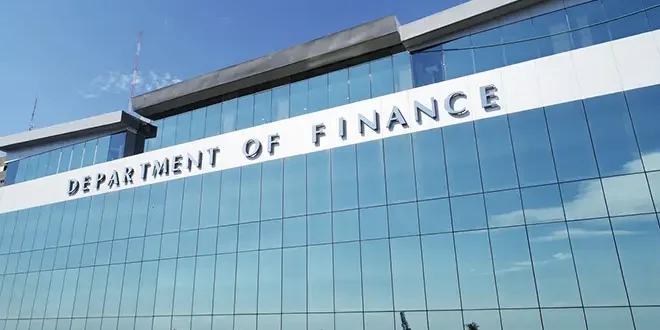
Finance Secretary Ralph Recto last week said the Philippine economy remains stable and adaptive amid global trade disruptions, with the government poised to capitalize on opportunities through key economic policies.
In a statement, Recto emphasized that the CREATE MORE (Corporate Recovery and Tax Incentives for Enterprises to Maximize Opportunities for Reinvigorating the Economy) Act will be instrumental in attracting investors to the country despite mounting global uncertainties.
Recto issued the statement following a major policy shift by former United States President Donald Trump, who announced a new wave of tariffs on imports, including a 17% duty on goods from the Philippines.
The Philippines, however, faces a lower tariff increase compared to its regional peers, with Vietnam hit by a 46% tariff, Thailand 36%, Indonesia 32%, Malaysia 24%, and Cambodia 49%.
“The Philippine economy is primarily driven by domestic demand rather than exports. This makes us relatively resilient against trade wars. However, as with all countries, we are not spared from the impact of the expected decline in international trade and possible slowdown of global growth due to supply chain disruptions, higher interest rates, and higher inflation,” Recto said.
He underscored the role of the CREATE MORE Act in bolstering investor confidence, especially among businesses seeking to relocate or diversify amid rising protectionism in major markets.
“Nevertheless, the CREATE MORE Act will strengthen our ability to attract investors looking to expand or relocate to the Philippines, given the relatively lower tariffs imposed on our exports to the United States. We are also actively pursuing more free trade agreements with our global partners,” he added.
Recto also pointed out that despite higher tariffs, shifting trade dynamics present new opportunities for the Philippines, particularly in positioning itself as a hub for global value chains.
Industries such as electronics, textiles, food processing, and automotive manufacturing are expected to benefit from this strategic pivot. Additionally, he highlighted the country’s edge in supplying coconut-based products like desiccated coconut and copra meal to the US market.
With traditional competitors such as China, Bangladesh, Vietnam, Mexico, and India facing steeper duties, Recto noted that Philippine garment exporters have a greater opportunity to expand their market share in the United States.
To further diversify its trade partners, the Philippine government is also pursuing new or enhanced free trade agreements with countries including the United Arab Emirates, the European Union, Chile, and Canada.