 The Market Monitor Minding the Nation's Business

By Luis Leoncio
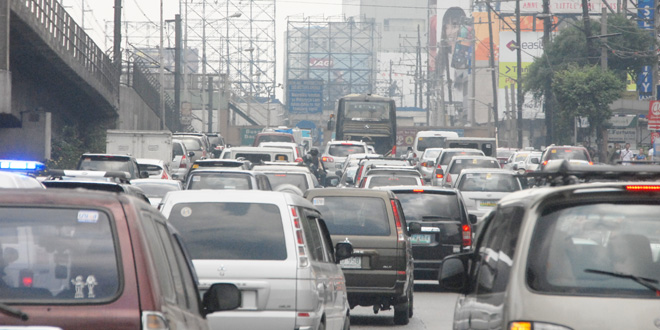
The congestion in Metro Manila is now considered an urban nightmare and it has finally instigated the forming of a panel at the House of Representatives to look into the possibility of relocating the seat of national government to help decongest the capital metropolis.
“Overpopulation, traffic congestion and high vulnerability to natural disasters have made Metro Manila or the National Capital Region (NCR) a pariah among world cities.
There is a need to rethink and develop a master plan that would decongest Metro Manila,” said Negros Occidental Rep. Alfred Benitez, chairman of the House Committee on Housing and Urban Development. Benitez authored House Bill 83 that seeks to create a technical working group (TWG) that would study the proposal to create an administrative capital city planning commission (ACCPC), which would look into the possibility of relocating the capital and the seat of government.
Finance Secretary Carlos Dominguez III, in a speech, cited the urgency of overhauling the country’s obsolete land-governance policies to prevent the severe case of poor land administration in Metro Manila from spreading all over the country.
Dominguez said that unless the government acts swiftly to upgrade its land governance policies, other areas of the country would suffer the same fate as that of Metro Manila, where high land costs and the lack of provisions for road expansions inhibit the government’s response to the worsening problems related to urban congestion.
“Metro Manila presents us with the most severe case of poor land governance.
This is an urban nightmare, a metropolis that grew without planning. Right now, high land costs prevent us from acquiring property to build schools and hospitals. Right-of-way has become a costly proposition for public works.
No provisions were put in place for road widening,” Dominguez said in his keynote speech at the Conference on Sustainable Governance organized by the US Agency for International Development (USAid).
The proposed ACCPC, Benitez said, will also study the feasibility of building in-city mass-housing informal settler families or ISFs, bureaucratese for squatter families Based on data provided by the Philippine Statistics Authority, Metro Manila is one of the most densely populated areas in the world.
As of 2010, it was home to 11.9 million people. This figure is expected to have increased sharply. “Out of the 1.5 million ISFs in the country, nearly 600,000 are found in Metro Manila.
The off-city government programs for the ISFs failed because many of those that have been relocated have returned to the National Capital Region as their relocation sites are far from their source of income,” Benitez said.
Avelino Tolentino III, Housing and Urban Development Coordinating Council (HUDCC) assistant secretary, said the agency supports the mass-housing proposal and suggested that to make the housing project more affordable, government lands should be converted into housing sites.
Tolentino said this could be cheaper in the long run for the government, which will still own the lands. Relocation, meanwhile, entails spending money to relocate to far-flung areas the that ISFs, which, however, end up returning to the NCR due to the unavailability of basic services in the new housing sites.
Tolentino said that by allowing the free use of government lands, tenants would only pay a small amount for the investment that the government will spend in constructing their housing buildings and for their maintenance.
Benitez said that under HB 83, the proposed transfer of the capital and seat of government is also an attempt to decongest Metro Manila. He cited several countries where relocated seats of government have flourished such as in Korea, Malaysia and Brazil.
Another example is Quezon City where a lot of government offices were moved because of the need to decongest Manila then. “If we had done it before because we wanted to decongest Manila, then the same reasoning applies that we could move our administrative offices out of Metro Manila,” Benitez said.
Manila, the historical capital, has been the recognized center of political and administrative authority since the time the country was still a colony of Spain.
Dominguez said the Department of Finance (DOF) has been doing its part in “bringing coherence” to the country’s land governance by moving to reduce estate taxes to encourage the documentation of land assets and to free them up for productive use.
Dominguez said the DOF is also encouraging local government units to update their land valuations as a measure not just to raise revenues but also to discourage owners of prime land in their respective localities from keeping these assets idle or non-productive.
He acknowledged that policies on land governance were “in urgent need of updating,” with the proposed National Land Use Plan “sitting in the legislative mill, with little indication it will be passed into law any time soon.” “So many of our settlements are vulnerable. Our cities are congested. Our forested areas have been stripped to make way for human habitation.
We are truly facing a land governance crisis and we must respond decisively to this,” Dominguez said. Dominguez cited Metro Manila as a supreme example of poor land governance.
“I hope the policymakers attending this meeting will learn from the experiences of others and help upgrade our own land governance capacity,” he said.