 The Market Monitor Minding the Nation's Business
By Rose de la Cruz
Since Executive Order No. 62 failed to reduce retail prices for rice, pork and other food commodities even at reduced tariffs from 35 to 15 percent last July until 2028, rice and hog farmers’ groups are asking the government to revert to the old tariff rate of 35 percent, to better protect farmers since revenues collected from imported goods are used directly to farmers.
The EO reducing tariffs has caused a substantia foregone revenues of the Bureau of Customs of P9 billion, of which P6.09 billion is for imported rice alone, Business Mirror reported Wednesday.
EO 62, which took effect on July 5 cut import tariffs on rice to 15 percent to tame inflation.
The EO extended the zero-tariff policy on electric vehicles and parts through 2028. It also expanded the coverage of the zero-tariff policy to e-motorcycles, e-bicycles, nickel metal hydride accumulator batteries, e-tricycles and quadricycles, hybrid EVs and plug-in hybrid EV (PHEV) jeepneys or buses.
“EO 62 expanded the zero-import duties under EO 12 to include battery electric vehicles (BEVs), hybrid electric vehicles (HEVs), plug-in HEVs, and specific parts and components, leading to an additional revenue loss of P2.9 billion,” Customs said.
For the first nine months of the year, Customs collected P690.84 billion, missing its target for the period by 0.44 percent, although this was 4.61 percent higher than P660.39 billion collected in the same period last year, Business World reported earlier.
The National Economic and Development Authority (Neda) is set to review the comprehensive and/or specific MFN (Most Favored Nation) tariff rates listed under Executive Order (EO) 62 by November.
The EO 62 provides for a periodic review every four months from effectivity.
.
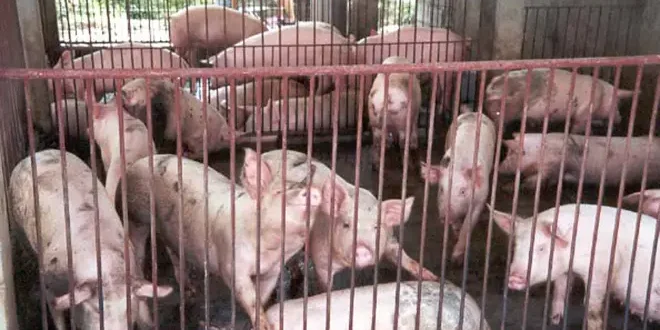
Hog farmers belonging to the National Federation of Hog Farmers Inc. (NatFed) said the tariff reduction did not lower the prices for consumers.
“We urge the government to raise back the tariffs to original levels to encourage more local production to manage our nation’s food security goals,” Alfred Ng, vice chair of NatFed told Business Mirror.
Ng said swine farmers had long been discouraged to raise more pigs due to competition from imported pork and the constant threat brought by the African swine fever (ASF) to the sector. He noted that prior to the ASF outbreak which devastated farms since its detection in 2019, the tariff on pork stood at 35 percent for in-quota shipments and 40 percent for out-quota shipments.
Under EO 62, the tariff rates for pork will remain at 15 percent in-quota and 25 percent out-quota. “If ibalik ang taripa to its original levels, mas may laban po ang magbababoy at maari magparami sila muli ng alaga nila [If ta-riff is returned to original levels, hog producers have a better chance and they could increase the stock they are raising],” he said.
The Samahang Industriya ng Agrikultura (SINAG) called for either an increase or reversion of the original tariff line for rice.
The Rice Tariffication Law (RTL) provides a tariff for rice of 35 percent if rice is imported within Asean and 180 percent if above the minimum access volume (MAV) and from non-Asean countries.
SINAG Executive Director Jayson Cainglet said the framework and parameters for the review of EO 62, particularly for rice, should hinge on the production cost of farmers which currently stands at P16 to P17 per kilo, the farmgate price of palay, and the actual retail price of rice notwithstanding the increase or decrease of inflation.
“As it is, the farmgate price of palay went down faster than the retail prices of rice,” Cainglet said.
From 26-P30 per kilo farmgate prior to the issuance of EO 62, prices dropped to P16-P17 per kilo for fresh or wet palay and P20-P22 per kilo for clean and dry palay, he reported adding that a drop of P5 to P10 per kg at the farmgate level is a major concern.
“We are yet to approach peak harvest, there is concern that the farmgate price of palay will plunge even further.”
Bigas spokesperson Cathy Estavillo urged the government to revoke the order and bolster support for local producers through subsidies and post-harvest facilities.
“From the start, many farmers have opposed EO 62 because it does not guarantee lower rice prices since the rice industry is liberalized,” Estavillo said adding that she would prefer an outright revocation of EO 62.
“We continue our advocacy to boost local production,” she said.