 The Market Monitor Minding the Nation's Business
The University of Asia and Pacific Center for Food and Agribusiness said the contribution of agriculture and fisheries to the country’s gross domestic product this year will drop by 1 to 2 percent because of the poor performance of crops, livestock and fisheries, owing to the El Nino and successive strong typhoons in October and November.
“Overall, we see a 1 to 2 percent decline in the agriculture, forestry, and fishery sector this year against a 1.2-percent growth in 2023,” CFA executive director Marie Annette Galvez-Dacul said in their recent year-end food and agribusiness conference.
Based on the organization’s forecasts, the crops subsector’s GVA would decline by 3.5 percent in the second half, with its full-year performance contracting between 3.5 percent and 4.5 percent, Business Mirror reported.
The livestock subsector is also projected to fall by 4.5 percent in the second half, with a full-year decline between 2.5 and 3.5 percent.
The poultry subsector will jump by 5.5 percent in the second half, with a full-year growth between 5.5 and 6.5 percent.
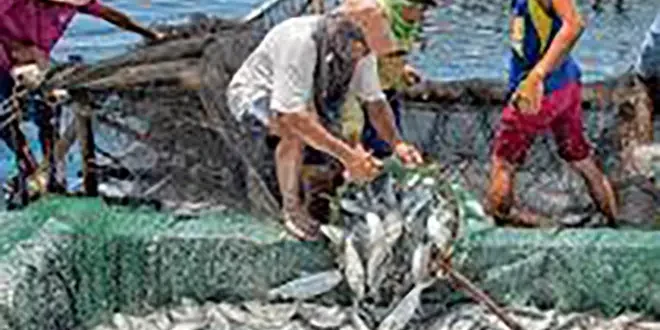
The fishery subsector is projected to plunge by 5 percent in the second half, with its full-year performance declining between 1.5 and 2.5 percent, based on their forecasts.
“For 2025, the Center for Food and Agribusiness projects modest growth for crops and livestock with an expected increase of 0 to 1 percent each,” Dacul said.
“Poultry is anticipated to remain the leading subsector, growing by 5 to 6 percent, while fisheries are forecasted to range from a decline of negative 0.5 percent to a growth of 0.5 percent,” she added.
Despite this, Dacul highlighted growth opportunities in the sector such as export-focused crops like coconut, cacao, and coffee with increasing demand worldwide and fruits that remain profitable for export markets like mangoes, bananas, durian, and pineapple.
For the aquaculture and fisheries side, she noted seaweed farming which shows opportunities to expand processing for food, pharmaceuticals, and cosmetics.
Key areas for growth in the livestock and poultry sector include free-range and organic poultry, biosecure pig farming, and value-added dairy such as cheese, yogurt, and flavored milk.
“These need enablers, which are government support [and] private sector collaboration in climate adaptation measures,” Dacul said.
“Addressing infrastructure gaps, market access, and climate challenges can enhance the sector’s contribution to economic growth and food security.”