 The Market Monitor Minding the Nation's Business
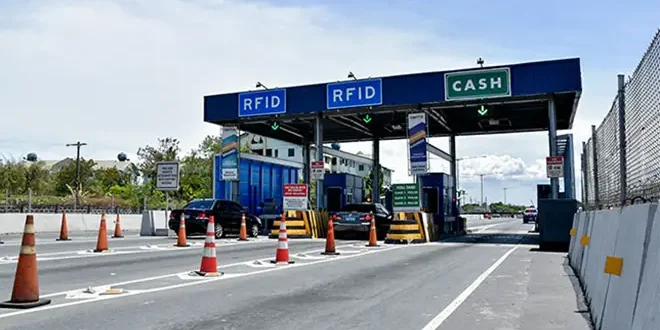
The government is considering lowering toll rates at the Manila-Cavite Expressway (CAVITEX) once the toll road becomes fully owned by the state through PEA Tollway Corporation (PEATC), officials said Thursday.
PEATC President and CEO Delfin Torrecampo Jr. said toll reductions may be possible once government ownership of the expressway reaches 100 percent.
“PEATC is the sole or the only government corporation operating a tollway in the Philippines. So ‘yung tanong po natin kanina, PEATC, through the national government, can subsidize the toll revenues because as of now, hindi muna naming pwedeng ipababa ang toll revenue because it is not yet a hundred percent owned by the government, meron pang joint venture partner,” Torrecampo said.
“But once 100 percent owned na ito ng gobyerno, ng PEATC, for sure one of the target po ng aming chairman of the Philippine Reclamation Authority (PRA) is to lower the rate of the CAVITEX compared to other tollways para ‘yung 100 pesos and toll rate per Toll Regulatory Board (TRB), it can be lowered to let’s say ₱80 kung tayo na, ang gobyerno na ang may-ari nitong tollway,” he added.
Torrecampo said the tollway currently generates around ₱3.6 billion annually, equivalent to roughly ₱10 million in daily revenue from about 200,000 vehicles using the road each day.
He added that the opening of the CAVITEX C5 Link Expressway Segment 3B is expected to generate about ₱300 million in additional annual revenue from an estimated 11,500 vehicles daily, raising the tollway’s projected yearly earnings to around ₱4 billion.
Of this amount, about ₱1 billion is expected to go to the national government through value-added tax and corporate income tax.
CAVITEX operates under a public-private partnership involving the PRA, through PEATC, which represents the government’s stake in the tollway. Meanwhile, Metro Pacific Tollways Corporation (MPTC), through Cavitex Infrastructure Corp., serves as the private concessionaire responsible for financing, construction and development.
Under the joint venture arrangement, the government and its private partner coordinate tollway operations, expansion projects and toll rate policies, subject to TRB approval.
Meanwhile, officials said discussions are ongoing with tollway partners and regulators on possible interventions to help motorists amid expected fuel price increases due to tensions in the Middle East.
PEATC chair and PRA director Anthony Peter Crisologo said a possible toll holiday—similar to the one implemented when Segment 2 opened in July 2024—is being studied.
“Because this is a joint venture, we have to discuss with our joint venture partners… So we’re not sure yet but I think it’s being discussed by TRB, PEA Tollway, and MPTC as well,” Crisologo said.
PRA Assistant General Manager Joselito Gonzales said the government continues to work with regulators and private partners to ensure toll policies remain responsive to economic conditions.
“Kami po sa gobyerno ay kaisa ng Pangulo sa paghanap ng mga magiging solusyon para ma-address po itong mga pupuwedeng mangyari as a result nitong nangyayaring kaguluhan sa ibang bansa,” Gonzales said.
He added that the PRA, PEATC and MPTC regularly hold project committee meetings with the TRB to review toll rate petitions and ensure decisions remain sensitive to prevailing economic conditions.
Gonzales also noted that government participation in tollway operations helps temper possible toll rate increases while safeguarding the interests of motorists.