 The Market Monitor Minding the Nation's Business
A total of 58,905 electric vehicles – BEV, PHEV, AND HEV – has already been sold in the Philippines since 2024 and last year’s recorded registered EVs amounting to P41,857 was the biggest ever recorded so far, proving that EV sales are growing in this country.
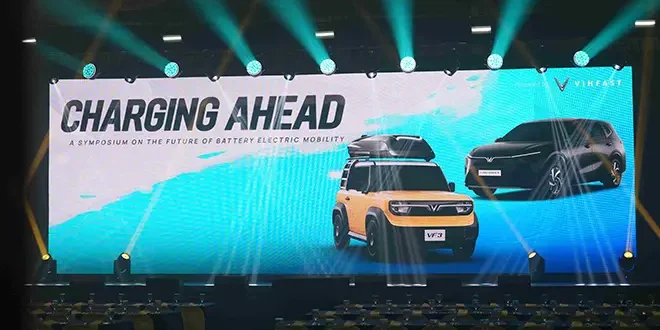
This were figures presented in the recent symposium organized and presented by Vinfast Philippines dubbed as “Charging Ahead: The Future of Battery Electric Mobility” last Feb. 11 at the Gallio Events Hall in Parañaque “designed to foster meaningful dialogue on policy, innovation, and the evolving role of electrification in moving Philippine businesses forward.”
The well-attended symposium brought together stakeholders from government, energy, and the automotive sectors to discuss the current state of EV adoption, the barriers slowing wider uptake, and the practical steps needed to make electrification viable for business fleets. Rather than centering the discussion on a single model, VinFast also used the forum to highlight how its growing EV lineup is being applied across different business use cases, underscoring a portfolio-led approach to accelerating EV adoption among Philippine enterprises.
The symposium opened with an overview of the Philippine EV landscape presented by Andresito Ulgado, Officer-in-Charge of the Electric Vehicle Industry Management Division of the Department of Energy, who outlined both the progress made and the structural reforms now shaping the country’s transition to electric mobility.
Ulgado disclosed that the EV registrations in the Philippines reached 24,286 units in FY2024, and more recently 41,857 units from January to September 2025, within a base of 14.6 million total motor vehicle registrations. As of early 2026, he added that the country has 1,351 charging points nationwide, alongside a growing number of accredited charging service providers and DOE-recognized EV models—figures that point to both progress and significant headroom for growth.
Data presented during the session showed that while EV penetration remains at an early stage compared to more developed markets, local adoption is gaining momentum.
Despite the upward trend in adoption, the discussion revealed several barriers that continue to slow wider EV uptake, including infrastructure gaps, higher upfront costs, energy price concerns, and questions around battery life, resale value, and consumer perception, adding that scaling adoption, particularly for fleets, will depend on how quickly infrastructure, policy, and industry execution move in step.
On the policy front, the panel said the Electric Vehicle Industry Development Act is built around three goals — reducing reliance on imported fuel, offering a practical transport option, and supporting cleaner, more efficient energy. While the Philippines is still catching up in the global EV transition, clearer policy direction and stronger private sector participation are helping move the market forward. The government is also rolling out concrete measures under EVIDA and the country’s long-term roadmap, including fleet mandates and requirements for EV parking slots and charging stations, as it works to scale up EV adoption and charging infrastructure toward 2030 and beyond.
From an industry standpoint, VinFast highlighted how the brand’s recently introduced battery subscription policy can help address one of the most cited barriers to EV adoption: high upfront costs. By separating battery ownership from vehicle purchase, the model is designed to make operating expenses more predictable and lower the initial investment required for fleet electrification. This is an approach intended to make the business case for EVs easier to evaluate and adopt.
Charging infrastructure was also identified as a critical enabler of wider adoption. V-Green emphasized that the expansion of reliable charging networks is key to giving businesses greater confidence in daily operations, particularly in terms of uptime, route planning, and operational continuity. The company added that accelerating EV adoption will depend not on a single solution, but on deeper ecosystem collaboration and stronger execution across industry players.
Addressing the gap between policy ambition and real-world uptake, the panel highlighted that the biggest shift needed is moving from intention to actual use. Operators only fully appreciate the benefits once they experience EV operations firsthand, pointing to lower maintenance requirements, reduced long-term costs, and less dependence on frequent fuel purchases. Markets have sustained EV adoption because users see these practical advantages in daily operations, underscoring that long-term viability is driven by performance on the ground, not just targets on paper.