 The Market Monitor Minding the Nation's Business
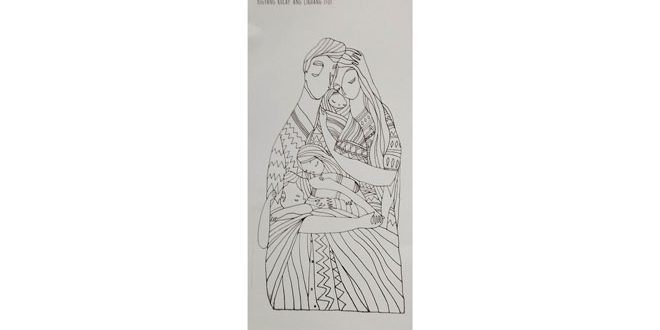

Ituro mo sa akin ang taguya sa bata, at nang hindi ka hanapin habang ikaw ay wala.(Teach me the lullaby so that the child will not look for you while you are away).
As a child of working parents, I remember that either my father or my mother would read me a story until I fall asleep. As I was growing up, I saw them doing the same to my sisters. I heard them sing lullabies, sometimes even humming popular love songs. When I had my child, I also used western lullabies like “Rock-A-Bye-Baby” and “Twinkle, Twinkle, Little Star” or nursery rhymes like “Red, white, and blue, stars over you…” and “1,2,3,4,5, Once I caught a fish alive…” Funny but I even sang Superwoman while putting my child to bed.
Today, I am already aware that Filipinos have lullabies from different parts of the country. Thanks to those trainings on culture and the arts, and just recently, the launching of “Himig Himbing Mga Heleng Atin” at the Cultural Center of the Philippines as part of the Children’s Biennale 2022. It featured eight music videos of lullabies from Luzon, Visayas, and Mindanao based on the research of ethnomusicologist Sol Trinidad and arranged by musical director Krina Cayabyab.
Featuring the songs Sa Ugoy ng Duyan, Katurog na Nonoy, Wiyawi, Aba-aba, Hele, Dungdungwen Kanto, Tingkatulog and Ili, Ili, Tulog Anay directed by Sigrid Bernardo, Mes De Guzman, Law Fajardo, Teng Mangansakan, Thop Nazareno, Carla Ocampo, Milo Tolentino, and Alvin Yapan; the project had been developed by Michelle Nikki Junia, Chris Millado, Eva Mari Salvador, Ronnie Mirabuena, Lino Matalang Jr., and Ian Darwin Wong.
After the launching with live audience composed of children and parents, each of the lullabies were uploaded online for the public to watch and listen to.
Last year during the pandemic, a book entitled “Hele ni Inay: A Compilation of Unpublished Lullabies in Quezon Province with Lesson Exemplars for Music” by Cherry Ann Layson was launched and donated at the Quezon Provincial Library. Some of the lullabies she presented and performed were: “Tulog na Bunso” from Dolores, “Tulog na Neneng” from Lucban, “Tulog na Bunso Ko” from Sariaya, “Tulog na ang Bata” from Lucena, “Batang Pigil” from Tayabas, “Meme na Bunso” from Catanauan, and “Hiyo na si Neneng” from Alabat.
It is interesting to rediscover the lullabies that have long been unheard of. There is magic in the music that calms and puts a child to slumber. It is about time to document these lullabies before they are totally forgotten by the present generation. We even have a local term for hele in Tayabas Tagalog. It is called taguya and when matched with a rhythmic gentle pat, it is called kayunda.
“Bangon na, Tirendeng, umaga na yata. Kung matulog ka pa’y para kang mantika,” and “Gising na Buningning, umaga na yata. Tilaukan ang manok sa lupa. Tatay, nagsasaing, ang Nanay ay wala. Kung matulog ka pa’y para kang mantika.” These two similar versions of our local lullaby could be proof of more research needed to explore this area of Philippine culture. There’s still a lot to know, there’s still a lot to rediscover and put out into the open for the present and future generations to learn and love. It’s good that these aspects are being considered now. It speaks volumes about our identity as a people.
What was the lullaby that made you stop crying and put you to a sound sleep as a baby?