 The Market Monitor Minding the Nation's Business
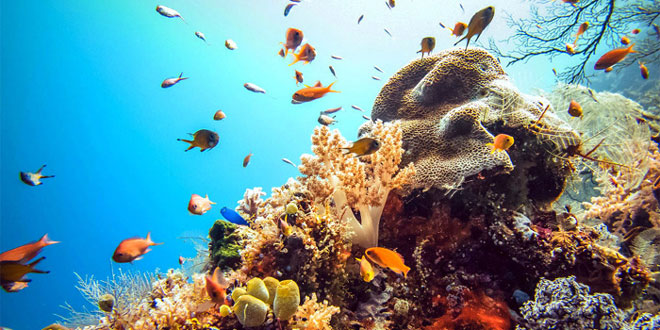
Liveaboard ships, which are really floating hotels packed with dive gear, compressors, tanks, chase boats and the dive pros are the only way divers can access this marine park.
Getting up in the quiet of the first day, with the sun still below the horizon, the sky is pink, as is the calm sea reflecting it. There is only a spit of land, called Bird Island I am told. Both Bird Island and the other island where the light house sits are off limits to humans. Luckily it is what lies beneath the waters that is the main attraction.
Aug. 11 commemorates the 30th year of the creation of Tubbataha as the country’s first national marine park.
Nothing beats being in Asia’s premier dive destination in person. Liveaboard ships, which are really floating hotels packed with dive gear, compressors, tanks, chase boats and the dive pros are the only way divers can access this marine park.
Puerto Princesa is the jump off point and the ships leave in the late afternoon or early evening in order to arrive in the morning light to be able to see the treacherous reefs that have claimed many a vessel.
Tubbataha is 98 nautical miles from any medical or emergency assistance and most dive operators require their guests to have 50 dives. Shark Airport is famous for the sharks that park themselves like airplanes on the sandy patches, taking off and then settling back in.
Staghorn Crest is so named because of the pristine fields of staghorn corals as far as one can see. This is also the best place to see turtles as they like to gnaw at the base of these branching corals to get at the algae that encrust them.
Delsan Wreck is another favored “must be dived twice” spot. The remains of the wreck is usually used as the marker to jump in. Riding the current right shoulder, a crack or a V-shaped plateau juts out from the otherwise endless wall. This protuberance disrupts the flow of the current, which sweeps over the top and attracts the bigger fish we have come to see. Schools of barracudas, jacks, hammerhead and whalesharks can be seen here along with big tunas and king mackerel.
Black Rock has been the go-to site for the mantas who favor one of several cleaning stations for their daily beauty treatment. The shallow areas are very dramatic with schools of black snappers, giant and blue fin trevally running around soft coral covered mounds where spotted sweetlips have taken up residence.
The walls of Tubbataha are like hanging gardens where humongous seafans, bright red seawhips, barrel sponges the size of two-door refrigerators, pastel-colored sponges and soft coral cover almost every inch of the surface in Kook, Seafan Alley, T wreck and Southwest wall.
Malayan Wreck’s claim to fame is not only the picturesque remnants of the engine and the vibrant fish life that have taken up residence but also the hammerhead and tiger sharks that patrol the wall. There is also a reliable school of bumphead parrotfish on the reef top which divers encounter during their safety stop.
The weather imposes its own limits to park access. Although the park is open year-round, it is only the Philippine summer months from late March to mid-June when the seas are their calmest and clearest that live-aboard ships come to Tubbataha. The park thus has nine months to settle back into its natural rhythm without the human pressure.
But more importantly, many people have been good to Tubbataha. Support comes from many unexpected quarters, from concerned individuals and organizations, in various forms and means and the park fees paid by each diver make up for more than 50% of the budget needed to protect the park. This protection comes at a high cost. Not only financially but also emotionally for the rangers that are assigned to this far flung post.
A contingent of eight to 10 armed rangers are assigned here on two-month rotations, sharing a living area that is half the size of a volleyball court. During low tide, they might get a chance to jog along the sandbar that appears but for the most part they live, eat, play and sleep almost shoulder to shoulder. Back on the mainland, the Tubbataha Management Office is their lifeline. Headed by the charismatic manager Angelique Songco, she acts as a mother, sister, aunt and a kindhearted but firm boss to the almost 30 staff and rangers. Her rash guard says “Mama Ranger” and she has been running the office since 2001 but had been a volunteer even before the park was established.
Tubbataha is the major source of fish and coral eggs that enrich fisheries not only in Palawan and the Visayas islands but also as far south as Malaysia. It is not for its beauty that they take care of it but primarily for its contribution of the food security of the country. It is a UNESCO World Heritage Site, a Ramsar Site, and an ASEAN Heritage Park. It is also the first Particularly Sensitive Sea Area in Southeast Asia established by the International Maritime Organization in 2017.