 The Market Monitor Minding the Nation's Business
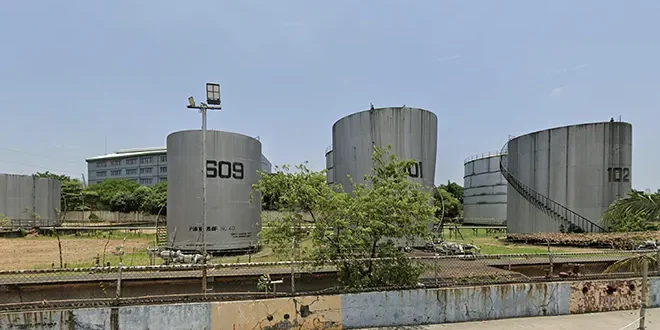
The United Arab Emirates (UAE) and Saudi Arabia are willing to finance the construction of oil storage facilities in the Philippines, potentially giving the country priority access to petroleum supplies during major disruptions in the global energy market, the Department of Energy (DOE) said.
During a Senate Committee on Energy hearing, DOE Oil Industry Management Bureau Director Rino Abad said both oil-producing nations have expressed interest in establishing storage hubs in the Philippines using their own funds, sparing the Philippine government from shouldering construction costs.
“Saudi Arabia will shoulder all the costs,” Abad told committee chair Senator Erwin Tulfo.
Tulfo said the UAE had also offered to build a similar facility, which would remain under UAE ownership but could provide the Philippines with more immediate access to petroleum products during emergencies.
“They said that they will construct it using their own budget, but we will definitely benefit from it,” he said.
Abad said the proposed foreign-owned storage facilities would generally operate on a commercial basis. However, the DOE wants an arrangement that would guarantee the Philippines priority access, or reserve rights, during periods of severe supply disruption.
“Ang concern lang naman, in essence, is to prioritize tayo, may reserve right tayo when the time comes na may crisis (Our concern, in essence, is for us to be prioritized, that we have a reserve right when the time comes that there is a crisis),” he said.
The DOE has already submitted a concept note requested by Saudi Arabia for a proposed storage hub with a target capacity of 50 million barrels.
Abad said the newly created Philippine Strategic Petroleum Reserve team would continue discussions with Saudi officials to establish the project’s timeline and complete the remaining documentary requirements.
The UAE would be the next country to be formally approached, he added.
“Natapos na-submit na rin natin yung kay Saudi Arabia, now isusunod po natin yung United Arab Emirates (We have already finished and submitted the requirements to Saudi Arabia, and now we will proceed with the United Arab Emirates),” Abad said.
The DOE official noted that Saudi Arabia and the UAE have historically been among the Philippines’ petroleum suppliers and have export pipelines that provide alternative routes away from the Strait of Hormuz.
The proposed foreign-backed facilities would complement the government’s own strategic petroleum reserve initiative.
The Philippine National Oil Co. (PNOC) is pursuing a government-owned strategic reserve in Bataan, initially designed to hold one million barrels of petroleum products.
PNOC Deputy Manager Antonio Buenviaje said the facility is targeted for completion by 2027, with plans to eventually expand its capacity to 15 million barrels.
At its initial capacity, the Bataan reserve would cover only slightly more than two days of Philippine petroleum consumption, based on Abad’s estimate of 450,000 to 460,000 barrels per day.
Tulfo urged the DOE and PNOC to accelerate the administrative requirements for the projects, stressing the importance of expanding the country’s capacity to withstand international supply shocks.
“We need adequate reserves. We need to build our capacity to withstand external shocks,” he said.
The planned storage hubs could therefore provide the Philippines with an additional layer of protection against sudden disruptions in global oil supply, particularly those caused by geopolitical tensions or interruptions along critical petroleum shipping routes.