 The Market Monitor Minding the Nation's Business
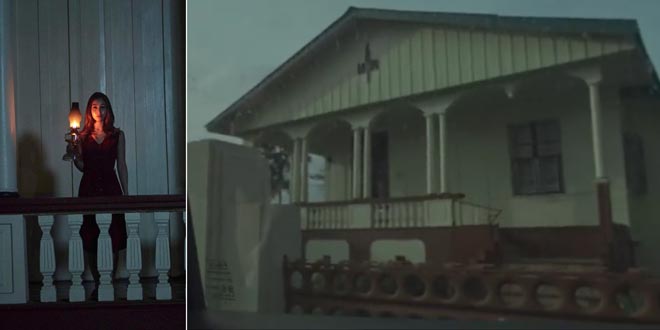

During the open forum after an in-person special screening early on this week of Viva Films’ “Bahay na Pula,” I asked its director Brillante Ma. Mendoza in the context of the provincial setting as milieu of the film if it is based on real events in the location itself, in Pola, Oriental Mindoro.
Does oral history preside in the adaptation of the tale to the big screen?
In more ways than one, Brillante said that the narrative is fictitious but he admitted there’s an allusion from the story of one old house (sans his description of it mostly painted in red-blood standing alone in the middle of a farm) in San Ildefonso, Bulacan. Still, without him elucidating on the backstory of the town heritage, though, it’s clear that there was a transportation of the historical information gathered from people or interviewees who had direct participation in the past event/s on first person accounts.
Into research and other sources of materials, the antique albeit disrepair house—built by a wealthy man named Don Ramon Ilusorio within the boundaries of the towns San Miguel and San Ildefonso in the late 1920s—is rich in facts and memories, very colorful, haunting and cinematic. To add veracity them, multimedia outlets had publicized the intriguing piece of the vintage edifice as British Broadcasting Corporation (BBC) on its news documentary; Philippine Daily Inquirer (PDI) and Esquire Magazine on their original and follow up stories; GMA Network which featured the old house in “Kapuso Mo, Jessica Soho” and “Motorcycle Diaries”; Cinema One Originals Film Festival which presented the doc film “Haunted: A Last Visit to the Red House)” by artist Phyllis Grande etc.
All these media reports have presented that the Ilusorio mansion was a silent witness to the barbarism and sexual abuse of the Japanese soldiers during the Second World War against Filipino women, young and adult, dragged and enslaved inside the house which was illegally transformed into a barracks after their fathers, brothers, husbands and sons from neighboring places as Pampanga suspected as guerillas were bloodily tortured and killed.
When the house was left alone after the war, oral history of ghostly apparitions which were passed on from one mouth to the other have been recorded.
This is one of the springboards of “Bahay na Pula” as a genre film.
Sordid stories from the northern spaces of Pampanga and Bulacan to the southern tips of Mindoro happening all at once?
Why not?
After all, there were common geo-political realities among these regions during the Japanese occupation, especially, chiefly the mighty and cruel imperial control of the Japs over the Filipino natives who were allied forces of their enemies in the same American imperialist tendencies.
Mendoza’s film project might have Mindoro as backdrop which is historically documented as well as a stronghold of Japanese forces and Aling Ising (Erlinda Villalobos) as one of its surviving resident comfort women, now the red house caretaker who holds the keys to its bitter and painful secrets, specifically, violence against women, and her holding a fanatic and romantic torch with a Jap officer (to the point of being a makapili) whose spirits are obsessed with Jane (Julia Barretto) before he was killed by foes, a synecdoche of Japanese conquest along with its militaristic and spiritual influences on the motherland superimposed in a mystical angst.
The house in Pola—the real and the reel—was and still is the nation in turmoil past and present, where there’s power relations between contemporary dwellers (Ising as a vindictive transference-possessed-spirit, semi-tenant killer and her conforming yet invisible landlord), guests (couple Jane—a consistently inconsistent submissive wife, one time irrepressible emissary of her mom in selling and transfer of the property, granddaughter of the owner—and Raffy, portrayed by Xian Lim, an on-and-off jealous husband and an allegedly corrupt boss) and Roger essayed by Marco Gumabao, accidental town folk, Jane’s former boyfriend and bureaucratic municipal employee, the love triangle of sort, in their interplay of tragic, personal and moral opprobrium.