 The Market Monitor Minding the Nation's Business
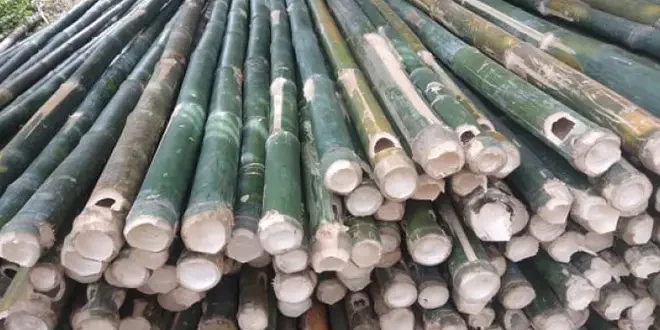
Bamboo has been gaining popularity for its diverse uses and applications around the globe, which is searching for sustainable and climate-friendly solutions for development.
Bamboo is the future, said Luiz Felipe Lopez, general manager of Base Bahay Foundation Inc. (BASE) in a recent huddle with reporters at the Bamboost IV Forum held at De La Salle University recently.
The Philippines currently plays a huge role in the development of bamboo technology, according to the Base Bahay Foundation, Inc. (BASE).
Lopez said the country must seize the opportunity to prove to the world it is currently developing world-class bamboo technology.
“We want to show the Philippines that this is not a local movement. This is a global movement,” said Lopez at the forum entitled: Bamboo in Building Sustainable and Resilient Structures.”
Sense of urgency
He urged the Philippines to act with a sense of urgency and capitalize on the momentum as the Philippines is known today as the research hub of bamboo development in the world.
“If we don’t push all this together, we’ll be left behind. We need to take the leadership and be the first in the research field. And the problem will emerge if these rich countries develop technologies that later they are going to sell us,” Lopez emphasized.
Right now, Lopez revealed BASE has been receiving requests from universities around the world to work in the laboratory for bamboo research and development. Today, BASE is host to several foreign students from the Netherlands, Cameroon, Austria and France.
Housing backlog
Despite the huge housing backlog in the country, bamboo is not going to play a major part in solving the problem because the government is more focused on constructing vertical housing units focused on the urban areas.
The KPS Foundation said the country’s current housing is estimated at 6.5 million units. It added that the backlog is projected to increase to 22 million by 2040 if not addressed. The situation is particularly challenging for low-income families and those in rural areas where affordable housing options are limited.
But Lopez reported the interest shown by some LGUs in the Visayas to use bamboo in their socialized housing program. Furthermore, bamboo is increasingly used in sustainable and affordable housing projects, particularly through the Cement Bamboo Frame Technology (CBFT) developed by Base Bahay Foundation. The technology, which utilizes bamboo as the primary structural element, is designed to be disaster-resilient and cost-effective, offering an alternative to traditional construction methods.
Still, Lopez remains optimistic that the national government some day will realize that bamboo is going to help a lot in addressing the shortage in the country’s affordable housing market.
“Our intention with bamboo is also to bring international experts to show the local Filipinos what is happening around the world,” Lopez said.
Bamboo’s potential for vertical structures
University of Bristol Research Associate Dr. Dominika Malkowska, a Polish, discussed in her presentation the potential of using bamboo in building vertical structures, which she is conducting more research on bamboo for constructing buildings to achieve higher sustainability.
Lopez said he was surprised why Malkowsa is conducting research on bamboo which is non-existent in the United Kingdom.
“Bamboo is the future. Most of the construction in the world will happen in the tropics. Europe, the United States and Japan will be doing few building construction,” Lopez said.
It would be a different scenario for the Philippines, Colombia and other developing economies where a huge number of their populations are in need of socialized housing units.
Lopez said continuous education on the use of bamboo for housing needs is needed to spread awareness to the people including the government that the Philippines has a great resource to address the dearth in housing among the majority of Filipinos.
He cited the case of Bali in Indonesia wherein residents were reluctant to use bamboo in the construction of their homes. Now, they have thousands of bamboo buildings in Bali.”
Lopez hopes Filipinos will realize the importance of bamboo especially in low-income housing. He said there are success stories in the Philippines and Nepal to prove bamboo is the right material for such a project.
Phil. National Structural Code
The forum was a crucial platform for dialogue and knowledge exchange in creating environmentally friendly and structurally sound buildings and advancing the adoption of bamboo into the National Structural Code of the Philippines.
The day-long event attracted architects, civil engineers, researchers, developers, bamboo advocates, local government units, national government agencies, civil society organizations, and treatment facility partners, all eager to engage with the latest advancements and best practices in bamboo construction. Rose de la Cruz