 The Market Monitor Minding the Nation's Business

By Rose Marie de la Cruz
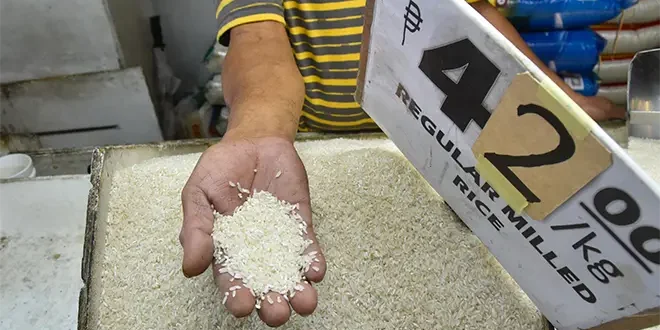
It’s not as though Filipinos only eat rice that too much emphasis– funds, attention and policy reforms– is being given to this staple crop.
We also eat vegetables, dairy, fish, fruits, salt, onions, garlic, and more other than rice on a daily basis. Yet, little, if any emphasis or focus is given to these other food items, which sadly we need to import as they are not being supported by the government.
It is just right then that the Philippine Chamber of Agriculture and Food Inc. (PCAFI) is asking government to also support these food items, which are direly lacking in the country and which trade (supply and prices) is being cornered by cartels.
PCAFI President Danilo V. Fausto in a recent briefing said the Department of Agriculture’s (DA) budget has had too much of a focus on rice production.
“High-value crops have contributed 33 percent of the agricultural output in crops and rice is only 23 percent. Yet (we are) still pouring everything into rice,” he added.
For the DA budget of P200.19 billion, about P31.4 billion was allocated to the National Rice Program. Funding to support rice farmers mainly comes from the Rice Competitiveness Enhancement Fund (RCEF), which is financed by tariffs collected on imported rice, as authorized by the Rice Tariffication Law of 2019 or Republic Act No. 11203.
“Pouring in money is welcome. But as we go and plant rice, and we always say we are rice-centric, we need to plant new food. We have to have new ways of planting our food and modernize,” he said.
He added that the tariffication law includes a provision that allows excess rice tariff collections to help rice farmers diversify into other crops.
“There’s so much (demand) for rice, and we cannot produce (all of it); therefore we will always be importing. We can produce high-value crops, but we have not given the budget to develop high-value crops,” Mr. Fausto said.
On Monday, President Ferdinand R. Marcos, Jr. signed Republic Act 12078 or the measure amending the Agricultural Tariffication Act, which tripled the annual allocation of RCEF to P30 billion and extended it until 2031.
Fausto said despite billions being earmarked to support rice production through RCEF, disbursement for mechanization remains slow.
“Anything additional to the budget of the DA is always welcome… The problem is in the implementation, and we need to look into that,” he added.
He stressed that irrigating rice planting areas remains a challenge due to the country’s geography.
“We are an archipelago. We cannot produce rice like India or Vietnam or Thailand. We are composed of islands and it’s difficult to irrigate,” he added.
He said that the average yield per hectare for rice remains below the yield targeted under RCEF.
Palay or unmilled rice production is expected to fall to 19.3 million MT this year due to the combined effects of the dry conditions brought by El Niño and the increased rainfall due to La Niña, according to the DA, concluded a Business World story.
My take
I have always been pointing this out, decades ago, when I noticed that too much focus is given to rice, when consumers also eat other food items that, with proper attention and budget, we can be sufficient in and reduce the need to import them.
But like they said, it is easier to import (and more money can be had from commissions on the side) instead of pouring funds in producing more rice and other foodstuff. Let’s see if this decade will be any different.