 The Market Monitor Minding the Nation's Business
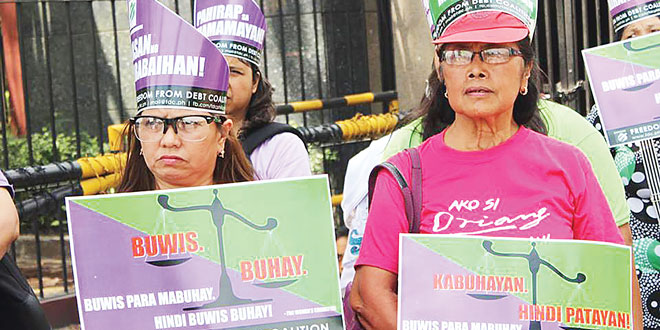
With several tax reform packages now in the offing, tax seems to be on everyone’s mind. Not for Aling Lina though, the woman who sells fried plantains daily at the street corner. She practically works the whole day, whether attending to household chores, or earning a living that on good days brings in barely P200 a day. Besides, Lina said she’s not “really” a taxpayer.
But she is, and so are millions of other women in the informal sector. Far from the grind and grime of Manila’s streets where Lina struggles daily to make ends meet, tax measures are being laid out that will shift a heavier share of revenue-raising efforts to them and the greater mass of consumers, budget watchdog Freedom from Debt Coalition (FDC) said.
It said that differing only slightly, the proponents commonly push increasing exemption levels, which would of course benefit income earners but they are also agreed on giving corporations yet another break by cutting corporate income taxes from 30 percent to 25 percent, notwithstanding the many tax perks big firms already enjoy.
“Here’s where small vendors such as Lina and the consuming public come in. To make up for the resulting revenue shortfall, value added tax (VAT) will continue to be levied but as a single 12 percent rate that will be borne by consumers. Exemptions and zero-rating, which would have cushioned to some degree VAT’s adverse impacts on disadvantaged groups, are to be largely done away with,” FDC said.
Other Asian countries such as Pakistan, Bangladesh and India have taken similar directions of either increasing VAT or adopting a uniform rate, and not without insistent prodding by the International Monetary Fund.
It is argued that VAT quickly and efficiently raises revenue so cash-strapped governments in the developing world need to move away from taxing corporations and the wealthy. By the IMF’s logic, one must simply try harder to make VAT work.
“Imposing the same rate on rich and poor alike, VAT is well-established as a regressive tax, and even more so when it is shorn of exemptions. This means that poor people spend a higher proportion of their incomes than the rich on VAT payments,” FDC said.