 The Market Monitor Minding the Nation's Business

Headline inflation in the Philippines dropped to 1.3% in May 2025, down from 1.4% in April, marking the lowest level since November 2019, when it was at 1.2%, according to the Philippine Statistics Authority (PSA).
In a briefing last week, National Statistician Dennis Mapa said the year-to-date average inflation now stands at 1.9%, at the lower end of the government’s 2% to 4% target range.
Mapa attributed the continued downtrend mainly to slower price increases in housing, water, electricity, gas, and other fuels, which registered a 2.3% uptick in May from 2.9% in April. Restaurant and accommodation services also slowed to 2% from the previous month’s 2.3%, while the transport index recorded a faster annual decline of -2.4% from -2.1% in April.
Food inflation remained steady at 0.7%. Notably, rice inflation dropped further to -12.8% in May, from -10.9% in April.
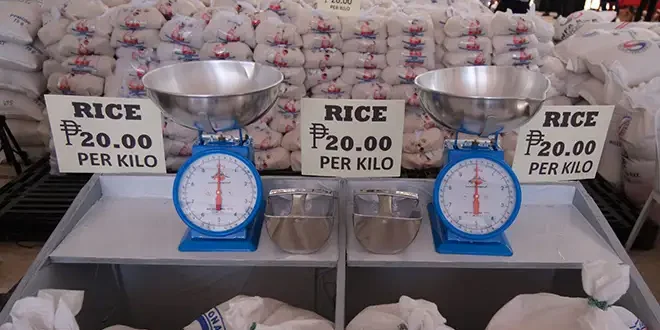
Mapa cited the rollout of the P20-per-kilogram rice program, launched under the directive of President Ferdinand R. Marcos Jr. and implemented through the “Benteng Bigas Meron Na” initiative, as a key factor in lowering rice prices.
In May, the average price of regular milled rice dropped to P43.19 per kg from P51.11 a year earlier. Well-milled rice fell to P49.45 from P56.06, and special rice declined to P59.80 from P64.41 per kg.
The bottom 30% income households experienced zero inflation in May, a significant improvement from 5.3% in the same month last year. The National Capital Region also posted a lower inflation rate of 1.7%, down from 2.4% in April. Other regions recorded an average inflation of 1.2%.
In a separate statement, the Department of Economy, Planning, and Development (DEPDev) welcomed the continued slowdown in inflation as a sign of progress toward easing price pressures and improving affordability for Filipino families.
“We are encouraged by this development. It reflects the success of our sustained efforts to protect the purchasing power of Filipinos,” said DEPDev Officer-in-Charge and Undersecretary for Policy and Planning Rosemarie Edillon.
To maintain the downward trend, DEPDev said the Marcos administration remains committed to targeted policy interventions to manage inflation risks.
Among these measures are inter-agency initiatives to ensure food security and affordability. The Department of Agriculture (DA) and the Food and Drug Administration (FDA) are accelerating efforts to secure animal vaccines for ongoing African Swine Fever (ASF) and Avian Influenza outbreaks. A commercial rollout of an ASF vaccine is expected before year-end.
Additionally, the DA extended the deadline for fish import permit issuance to June 2025, allowing importers more time to comply with revised rules.
The P20 rice program is also set to expand with Phases 2 and 3 launching in July and September across more areas in Visayas and Mindanao.
“With these strategies in place, we are optimistic that the government will meet its full-year inflation target of 2 to 4%,” Edillon added.