 The Market Monitor Minding the Nation's Business
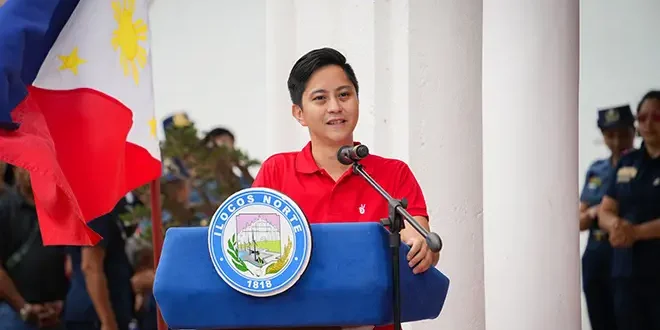
The House of Representatives will neither obstruct nor delay any impeachment complaint that may be filed against President Ferdinand R. Marcos Jr., House Majority Leader Ferdinand Alexander “Sandro” Marcos said Friday.
Marcos stressed that once an impeachment complaint is formally lodged with the Office of the Secretary General and transmitted to the Office of the Speaker, the House is constitutionally mandated to act on it, following established procedures that include referral to the committee on rules and, subsequently, to the committee on justice.
“Tungkulin ng Kamara, sa ilalim ng Saligang Batas, na aksiyunan ang anumang impeachment complaint na ihahain laban sa sinumang impeachable official (Under the Constitution, it is the duty of the House to act on any impeachment complaint filed against any impeachable official),” Marcos said.
As majority leader, he said his office is responsible for ensuring that any impeachment complaint is referred to the House Committee on Justice after it is calendared and read in plenary.
“Dapat dinggin ng Kamara ang anumang isasampang impeachment complaint, kahit pa ito ay laban sa aking ama (The House must hear and consider any impeachment complaint, even if it is against my father),” he added.
Marcos underscored that impeachment is a constitutional mechanism “governed by rules and due process,” and that the House is expected to proceed “without prejudice and in accordance with established procedures.”
Meanwhile, Lanao del Sur 1st District Rep. Zia Alonto Adiong defended the Office of the Secretary General’s refusal to receive an impeachment complaint in the absence of Secretary General Cheloy Velicaria-Garafil, saying the move was consistent with House Rules and long-standing parliamentary practice.
“The receipt of an impeachment complaint is not a casual or clerical transaction. It is a formal constitutional act that must strictly comply with House Rules. It cannot be improvised, delegated casually, or reduced to a mere drop-off,” Adiong said.
The chair of the House Committee on Suffrage and Electoral Reforms said the stringent process reflects the gravity and significance of impeachment proceedings.
Adiong explained that House rules require impeachment complaints to be formally filed with and received by the Secretary General, the official custodian of House records and certifications.
“Acceptance of such a complaint is not a merely ministerial act. The Secretary General is required, upon receipt, to determine whether the complaint is complete and whether it complies with constitutional and rules-based requirements on form, including verification, endorsements, and accompanying documents,” he said.
“This is not a mechanical function that can be exercised without authority or accountability.”
He added that without the Secretary General or a duly authorized acting official, the office cannot validly accept an impeachment complaint, warning that doing so would raise serious questions about the integrity and official acknowledgment of the filing.