 The Market Monitor Minding the Nation's Business
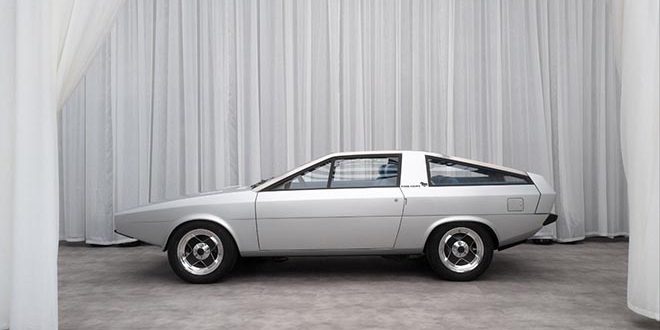
Hyundai Motor Company’s recreated Pony Coupe Concept, an important vehicle in the company’s history and design heritage that was originally unveiled at the 1974 Turin Motor Show, has made its world premiere nearly 50 years after its original debut in Lake Como, Italy.
Hyundai Motor unveiled the rebuilt Pony Coupe Concept at the inaugural Hyundai Reunion, a heritage brand platform that reflects on Hyundai Motor’s past and its future direction. Among those present were Giorgetto Giugiaro and his son Fabrizio Giugiaro, long-time designer himself.
Under the Pony Coupe Concept restoration project, the restoration project is a testament to the spirit, daring passion and ambition that Hyundai employees and executives had to create a global brand with the Pony Coupe Concept at its forefront.
“Despite the poor industrial environment in the 1970s, my grandfather and Hyundai’s founding chairman Ju-young Chung poured his heart and soul into rebuilding Korea’s economy and improving the lives of its people after the devastating Korean War. He finally realized his vision of making Korea a country capable of developing its own vehicles with perfection,” said Euisun Chung, executive chair of Hyundai Motor Group. “I express my sincere gratitude to everyone from both Italy and Korea who played a critical role in the success of Pony.”
The car is now considered a retro-futuristic classic that has served as design inspiration for more recent Hyundai Motor models, such as the N Vision 74 hydrogen-hybrid electric ‘Rolling Lab’ development vehicle and the ‘45’ EV concept car that directly influenced the IONIQ 5 all-electric vehicle.
The Pony Coupe Concept’s origami-like exterior features flowing geometric lines, a sleek roofline, pure unadorned surfaces, dynamic proportions, a uniquely shaped B pillar. It boasts an extremely graphic surface treatment with bumpers painted in body color. Its wedge-shaped snout and circular headlamps distinguished it in 1974 and still look ultra-stylish today. Its coda tronca (‘cut-off tail’) has a slim hatch to provide access to the back of the car.
The minimalist interior showcases an iconic sensibility highlighting the monocoque design and driver-centered floating architecture. A single-spoke steering wheel and two-toned slim-line bucket seats reinforce what was in the 1970s a futuristic aesthetic.