 The Market Monitor Minding the Nation's Business
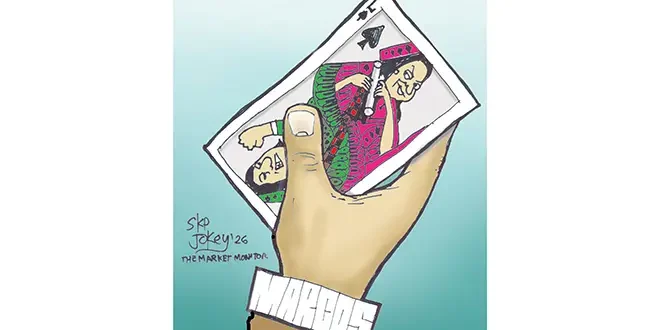
Many years ago, Philippine politics operated within boundaries that felt almost immovable. Certain outcomes were simply unthinkable. That a “plain housewife” like Corazon Aquino would be thrust into history to replace her assassinated husband, Ninoy, and defeat a dictator. That her quiet, unassuming son, Noynoy, would later carry the Aquino name back to Malacañang. That the Marcos and Duterte clans—once rivals with overlapping but competing ambitions—would unite to sweep the presidency and vice presidency. Or that the son of a deposed dictator would return to power not by force, but by numbers, narrative, and a carefully curated forgetting of the past.
Yet Philippine politics has a way of normalizing the previously unimaginable.
Today, another unthinkable scenario appears to be taking shape, hinted at by a series of seemingly disconnected events. Social media posts urging former Vice President Leni Robredo—now Naga City mayor—to run for president in 2028. A steady stream of prominent opposition figures making pilgrimages to Naga. President Ferdinand “Bongbong” Marcos Jr. himself visiting the city to fast-track government projects. On the surface, these are harmless gestures. Taken together, they suggest something far more consequential.
Former Senate President Franklin Drilon has warned that the opposition must field a single presidential candidate in 2028, knowing that Vice President Sara Duterte will do everything to win. The stakes are existential. A Duterte presidency could mean renewed protection, even impunity, for her political camp. On the other side, Bongbong Marcos faces his own reckoning. To shield himself and his family from future prosecution or political retribution, he must ensure that his successor is not hostile—or worse, vindictive.
This is where the truly unthinkable enters the frame: Bongbong Marcos anointing Leni Robredo as his successor.
From a purely strategic standpoint, it makes an unsettling kind of sense. Leni Robredo remains the single most credible national figure capable of defeating Sara Duterte. She carries moral capital, international goodwill, and a loyal grassroots base. For Marcos, backing a weaker candidate risks a Duterte victory and all its consequences. Supporting Robredo, paradoxical as it sounds, may be the safest exit strategy available.
But the real obstacle is not Marcos. It is Leni.
Robredo has never hidden the pain of her 2022 defeat, a loss many of her supporters still view as manipulated and unjust. Accepting Marcos’ endorsement would demand a level of political forgiveness—and pragmatism—that could fracture her own “pink” movement. Many of her followers would feel betrayed, disheartened, even politically homeless. The symbolism alone would be jarring: the face of democratic resistance lifted by the very family she once opposed.
Yet refusal carries its own cost. If Leni declines, Marcos loyalists must confront the possibility of a Duterte succession and the dark fate that may await their leader. In that scenario, alliances collapse, protections vanish, and yesterday’s unity becomes tomorrow’s liability.
Philippine politics has always thrived on irony, reversals, and uncomfortable coalitions. What once seemed impossible has a habit of becoming inevitable. As more “innocuous” signs emerge, the question is no longer whether the unthinkable can happen—but whether the country is prepared for what it will demand in return.