 The Market Monitor Minding the Nation's Business
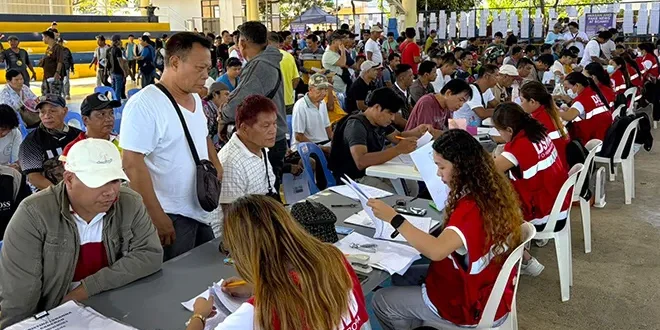
“Go easy on helping the poor. Make your ayuda program only temporary, you do not have much money.”
This was— in layman’s language— what Krishna Srinivasan, director for the Asia and Pacific Department of the International Monetary Fund (IMF), advised the Philippine government under President Ferdinand Marcos Jr. and other similarly situated states in Southeast Asia, in the face of the prolonged conflict in the Middle East.
The IMF urged the Philippine government to deploy a targeted fiscal response to the energy crisis, prioritizing the most vulnerable sectors as the country confronts the fuel turmoil with diminished budget buffers.
At a press conference on Friday, Krishna Srinivasan, noted that public sector debt—hovering around 60 percent of gross domestic product from 41.5 percent before the COVID-19 pandemic—now constrains the government’s ability to scale up broad economic support.
“So, there’s not much of a fiscal buffer. So use your buffers in a very efficient way,” Srinivasan said.
“And that’s what is important for Philippines and for other countries in the region, especially those which rely a lot on imports [and] don’t have much physical buffers of oil and gas,” he added.
The IMF official stressed that it is important for cash-strapped economies in the region to only implement focused support to avoid further straining their fiscal positions. He pointed out that the response of the Philippines to the West Asia war-driven energy crisis should remain time-bound and targeted to help preserve its limited fiscal buffers as price shocks may persist.
“Buffers have come down, and so providing targeted support is very important, and that applies in the case of (the) Philippines. Debt levels aren’t very low; it’s still at about 60%. So, there’s not much by way of fiscal buffers,” Srinivasan said.
Since the war in the Middle East erupted in late February, the government has implemented several support measures mainly to ease the financial burden for the public transport sector and consumers.
These include cash aid and a P10-per-liter fuel subsidy for public transport drivers, a 20% fare discount for commuters, as well as the suspension of the excise tax on kerosene and liquefied petroleum gas.
The Department of Finance said the excise tax halt could lead to revenue losses of around P4.1 billion over the next three months.
In its newest World Economic Outlook, the fund lowered its 2026 growth forecast for the Philippines to 4.1 percent from 5.6 percent.
If that projection holds, it would mark the country’s weakest performance since 2011, excluding the pandemic-induced contraction of 2020. The revised figure also suggests the Marcos administration will likely miss its growth targets for a fourth consecutive year.
While the IMF expects a rebound to 5.8 percent in 2027, even that recovery would fall short of the economy’s estimated potential of roughly 6 percent. The fund and other multilateral lenders pointed to the same strain: The Philippines is still recovering from the fallout of the flood control graft and corruption scandal, and it may never recover from this crisis of confidence because officials are either lukewarm or incompetent in punishing the guilty.